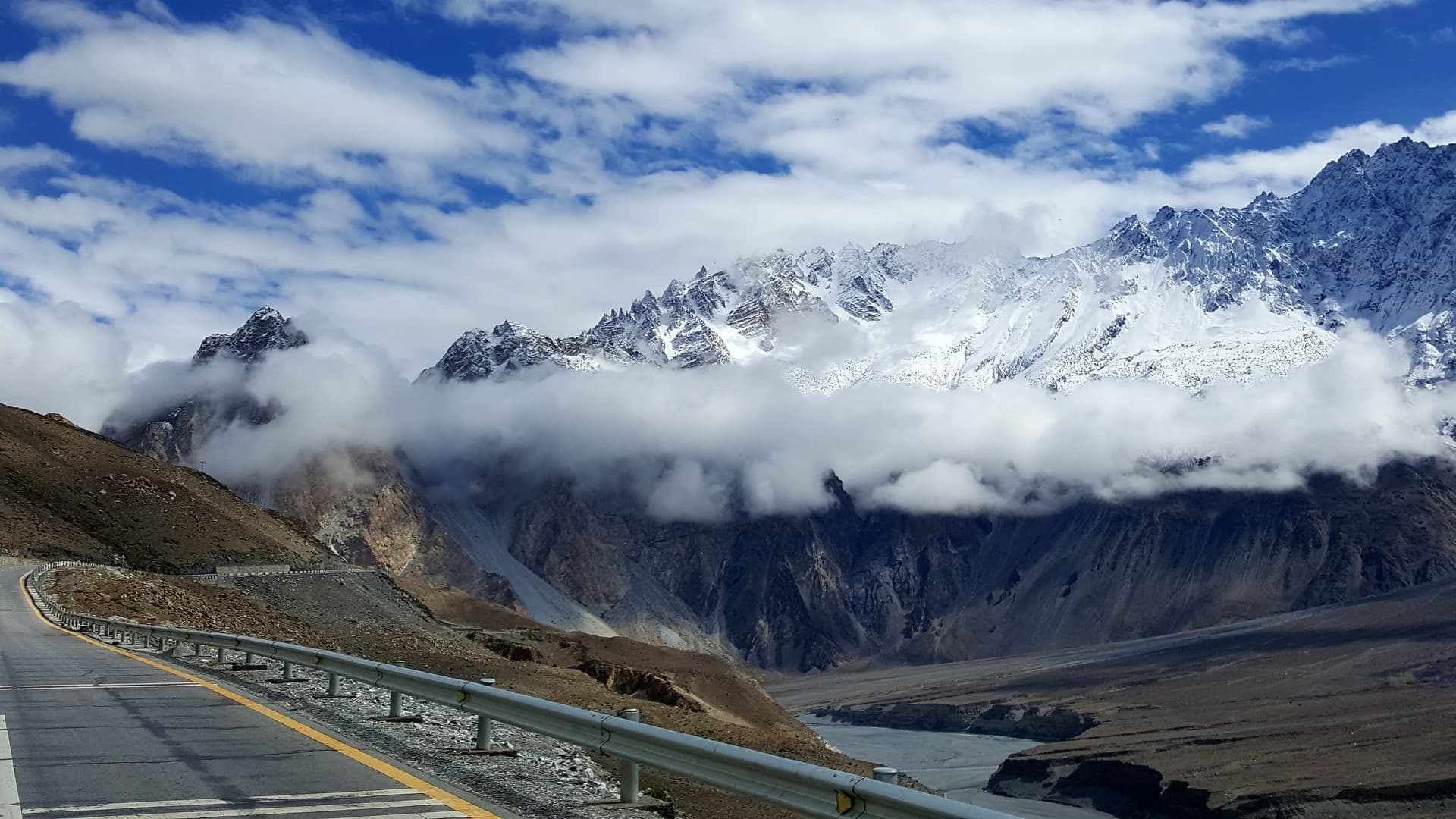
Silk Road Explorers Tour
A 14-day cultural journey through ancient trade routes and the legendary Karakoram Highway.
Silk Road Explorers Tour
A 14-day cultural journey through ancient trade routes and the legendary Karakoram Highway.
A 14-day cultural journey through ancient trade routes and the legendary Karakoram Highway.
The Silk Road was an ancient network of trade routes linking China, Central Asia, the Indian subcontinent, and Europe for over 1,500 years, carrying not only silk and spices but also ideas, religions, and cultures across continents. One of its key modern sections is the Karakoram Highway, often called the “Eighth Wonder of the World,” which follows historic caravan paths through some of the world’s highest mountain ranges. This journey passes dramatic landscapes including glaciers like the Batura Glacier and connects regions such as Taxila and Hunza Valley, both historically linked to Silk Road culture. The route culminates at the high-altitude Khunjerab Pass, symbolizing the enduring connection between civilizations through trade, travel, and cultural exchange.
Trip Stats
Difficulty
Moderate
Max Altitude
4,734 meters
Wind Speed
20-30 km/h
Temperature
-5°C to 20°C
Overview
The Silk Road was not a single road but a network of interconnected routes that linked China with Central Asia, the Indian subcontinent, and Europe for over 1,500 years. The name was first used by German geographer Ferdinand von Richthofen in the 19th century, from the word Seidenstraße, describing the routes where caravans carried silk, spices, ideas, and cultures across continents . This route not only flourished trading but also served as the means of transfer of ideas changing the Chinese world. Traders and pilgrims carried the new idea of Buddhism to China, traveling from Gandhara towards Taxila in Pakistan and further along the Karakoram Highway into the glacier-fed refuges of today's Xinjiang . The Karakoram Highway (KKH) traces one of the many paths of the ancient Silk Road . This 1,300-kilometer highway connecting Pakistan with China was built between 1968 and 1977, with about 810 Pakistanis and about 200 Chinese workers losing their lives mostly in landslides and falls during construction . Locals call it the eighth wonder of the world. The route passes along the Batura Glacier, valued as the seventh largest glacier throughout the world, and crosses the Khunjerab Pass, linking Europe and Asia as the Mintaka Pass did in ancient times . This distinctive journey takes us to explore the western part of the Silk Road, from the ancient trading cities of Central Asia to the mountain kingdoms of northern Pakistan. We will get the opportunity to drive on the well-known Karakoram Highway where traders, poets, and pilgrims traveled for centuries. The historical Silk Road has various stories—the pilgrims taking Buddhism, the armies of Alexander the Great, the caravans of spice, and the traders of silk, as well as the mysterious explorers of the Great Game between Russia and the British Empire . Alpine Karakoram Adventure offers this transnational cultural journey for travelers seeking deep historical understanding, Buddhist heritage exploration, and the dramatic mountain landscapes that have connected civilizations for millennia. From the Sunday market in Kashgar to the ancient forts of Hunza, from the Buddha caves of the Silk Road to the Gandharan treasures of Taxila, this tour brings the history of the Silk Road to life.
Trip Highlights
What makes this trekking special
Drive the full length of the Karakoram Highway, following the ancient Silk Road through the Karakoram, Himalayas, and Hindu Kush
Cross the legendary Khunjerab Pass at 4,734 meters, the highest paved international border crossing in the world
Explore the ancient forts of Hunza—Baltit Fort (700 years old) and Altit Fort (900 years old)—that once guarded the Silk Road
Visit the thousands of Buddha caves along the Silk Road, with artwork and statues representing the Gandharan architectural style
Walk through the ruins of Taxila, a UNESCO World Heritage site where Buddhist monasteries and stupas date back 2,500 years
Experience the Sunday market in Kashgar, where the population swells by 100,000 and everything from carpets to camels is for sale
Float on Attabad Lake's turquoise waters, a lake formed by a 2010 landslide that reshaped the valley forever
Photograph the Passu Cones, jagged spires rising dramatically from the valley floor along the ancient trade route
Stand at the junction point of the three greatest mountain ranges—Karakoram, Himalayas, and Hindu Kush—at Jaglot
Visit the ancient rock carvings and petroglyphs at Chilas, bearing witness to Buddhist travelers on the Silk Road
Explore the Gandharan Buddhist heritage in Swat Valley, once a major center of Buddhist civilization
Witness the pomp and flair of the Wagah Border ceremony between India and Pakistan in Lahore
Day by Day Itinerary
Arrive at Islamabad International Airport. Our representative meets you with an Alpine Karakoram Adventure signboard and transfers you to your hotel. Islamabad sits at 540 meters, with the Margalla Hills rising behind the modern capital. In the evening, your guide meets you for a briefing about the journey ahead—the history of the Silk Road, what to expect in the coming days, and answers to your questions. We recommend an early night. The adventure begins tomorrow. • Distance: 30 km from airport • Altitude: 540 meters • Accommodation: Hotel in Islamabad • Meals: Breakfast, Dinner
Morning transfer to Islamabad Airport for the flight to Gilgit. This 50-minute flight offers spectacular views of Nanga Parbat and the Karakoram giants. Upon arrival at Gilgit Airport (1,500 meters), our local team meets you. Visit Kargah Buddha, a 7th-century rock carving that testifies to the region's Buddhist heritage along the Silk Road . Explore Gilgit Bazaar in the evening, with its shops selling everything from gemstones to dried fruit. Overnight in Gilgit. • Distance: Flight 320 km • Altitude: 540m to 1,500m • Accommodation: Hotel in Gilgit • Meals: Breakfast, Lunch, Dinner
Drive north on the Karakoram Highway through the narrowing Hunza Gorge. Stop at Rakaposhi View Point for breathtaking views of the 7,788-meter Queen of Mountains. Continue to Attabad Lake—turquoise water where a massive landslide buried villages in 2010, creating a lake 22 kilometers long . Enjoy a short boat ride. Arrive in Gulmit village in Upper Hunza Valley. Check into your hotel. Evening walk through the village to experience Wakhi culture and hospitality. • Distance: 120 km, 4-5 hours driving • Altitude: 1,500m to 2,500m • Accommodation: Hotel in Gulmit • Meals: Breakfast, Lunch, Dinner
Early start for the full-day excursion to Khunjerab Pass at 4,734 meters, the border between Pakistan and China and the highest point on the Karakoram Highway . The drive takes you through Sost, the last Pakistani settlement, and climbs through Khunjerab National Park, which protects ibex, Marco Polo sheep, and snow leopards. Stand at the zero point where Pakistan meets China, following the ancient Silk Road traders. Return to Gulmit by evening. • Distance: 272 km round trip, 7-8 hours • Altitude: 2,500m to 4,734m and back • Accommodation: Hotel in Gulmit • Meals: Breakfast, Lunch, Dinner
Morning drive to Hussaini Village and cross the Hussaini Suspension Bridge, eight hundred feet of swaying planks above the turquoise Hunza River . Then drive up to Borith Lake, an alpine lake with stunning views of the Passu Glacier. Walk to the viewpoint of Passu White Glacier. Visit Passu village and photograph the famous Passu Cones, their jagged spires rising dramatically from the valley floor . Return to Gulmit for overnight. • Distance: 50 km, 4-5 hours with walks • Altitude: 2,500m to 2,800m and back • Accommodation: Hotel in Gulmit • Meals: Breakfast, Lunch, Dinner
Drive to Hopper Valley in Nagar District, famous for its glacier and traditional villages . Hike up to Hopper Glacier with views of Golden Peak (Spantik). After lunch, continue to Karimabad, the cultural capital of Hunza at 2,400 meters. Check into your hotel. Evening free to walk through Karimabad's bazaar. • Distance: 85 km, 4-5 hours driving • Altitude: 2,500m to 2,400m • Accommodation: Hotel in Karimabad • Meals: Breakfast, Lunch, Dinner
Full day exploring Hunza's cultural treasures. Morning visit to Baltit Fort, 700 years old, perched on a spur above the valley. Inside, restored rooms show how Hunza's rulers lived, with photographs of the valley before the highway came. Afternoon visit to Altit Fort, even older at 900 years, and the old village below with traditional stone-and-timber houses . Walk through the water channel path that has irrigated these fields for centuries. Evening drive to Eagle's Nest (Duikar) for sunset over the entire Hunza Valley. • Walking: 3-4 hours gentle walking • Altitude: 2,400m to 2,800m and back • Accommodation: Hotel in Karimabad • Meals: Breakfast, Lunch, Dinner
Drive south on the Karakoram Highway. Stop in Gilgit for lunch and a final visit to the bazaar. Continue to Chilas, following the Indus River through dramatic gorges. Visit the ancient rock carvings and petroglyphs at Chilas, bearing witness to Buddhist travelers on the Silk Road . Arrive in Chilas at 1,265 meters. Overnight in Chilas. • Distance: 220 km, 5-6 hours driving • Altitude: 2,400m to 1,265m • Accommodation: Hotel in Chilas • Meals: Breakfast, Lunch, Dinner
Continue south on the Karakoram Highway, following the Indus River downstream. Stop at Thalichi for the last view of Nanga Parbat. Drive through the towns of Dasu and Pattan, watching the landscape transition from arid mountains to greener hills. Arrive in Besham by evening. Overnight in Besham. • Distance: 335 km, 8-9 hours driving • Altitude: 1,265m to 600m • Accommodation: Hotel in Besham • Meals: Breakfast, Lunch, Dinner
Drive to Taxila, a UNESCO World Heritage site where Buddhist monasteries and stupas date back 2,500 years . Visit the archaeological sites of Jaulian, Mohra Moradu, and Sirkap, with the museum housing some of the finest Buddhist sculpture in the world—direct connections to the Gandharan civilization that spread Buddhism along the Silk Road. Continue to Islamabad. Check into your hotel. Farewell dinner at a local restaurant. • Distance: 280 km, 6-7 hours with stops • Altitude: 600m to 540m • Accommodation: Hotel in Islamabad • Meals: Breakfast, Lunch, Farewell Dinner
Drive to Lahore (4-5 hours) via the motorway. Upon arrival, visit the Lahore Fort and Badshahi Mosque, masterpieces of Mughal architecture . In the evening, explore the Walled City of Lahore and the Food Street for authentic Punjabi cuisine. Overnight in Lahore. • Distance: 375 km, 4-5 hours driving • Altitude: 540m to 215m • Accommodation: Hotel in Lahore • Meals: Breakfast, Dinner
Morning visit to the beautifully restored Wazir Khan Mosque and a walk through the Walled City's colorful bazaars . Afternoon excursion to the Wagah Border to witness the flag-lowering ceremony between India and Pakistan—a daily ritual of military pageantry that has occurred since 1959. Return to Lahore for overnight. • Distance: 60 km round trip • Altitude: 215m throughout • Accommodation: Hotel in Lahore • Meals: Breakfast, Dinner
Morning free for last-minute shopping in Lahore's famous bazaars—Anarkali, Liberty Market, or the Fort Road Food Street for souvenirs. After lunch, drive back to Islamabad (4-5 hours). Check into your hotel. Evening free for relaxation. • Distance: 375 km, 4-5 hours driving • Altitude: 215m to 540m • Accommodation: Hotel in Islamabad • Meals: Breakfast, Dinner
Morning free for last-minute shopping or relaxation. Visit Lok Virsa Museum or Faisal Mosque if time permits. Transfer to Islamabad International Airport for your international flight. The Silk Road Explorers Tour ends here, but the memories of ancient trade routes, Buddhist heritage, and mountain kingdoms stay with you. • Distance: 30 km to airport • Altitude: 540m • Transfer: Islamabad International Airport • Meals: Breakfast
For travelers wishing to begin the journey in China, we offer a Kashgar extension. Fly to Kashgar via Urumqi and spend several days exploring the ancient Silk Road city. Visit the famous Sunday market (Yakshambe Bazaar), the Eidgah Mosque, Abakh Hoja Tomb, and the old town. Drive to Karakul Lake for stunning views of Mustaghata Mountain, then to Tashkurgan before crossing the Khunjerab Pass into Pakistan to join the main itinerary. This extension adds 7 days to the tour.
Note: The Silk Road Explorers Tour involves crossing the Pakistan-China border at Khunjerab Pass, which operates officially from April 1 to November 30 each year . Special permits are required for foreign travelers; Alpine Karakoram Adventure arranges all necessary documentation. The Karakoram Highway requires flexibility—road conditions can change due to weather or landslides, and your guide has authority to modify routes for safety . Flights to Gilgit are weather-dependent and may be delayed. We build contingency days into the schedule. For those including the Kashgar extension, separate Chinese visas are required. Alpine Karakoram Adventure plans for reality so that you can focus on the history and beauty of the Silk Road.
What's Included
Included
13 items included
- Twin-sharing accommodation in hotels and guesthouses throughout
- All meals as specified (breakfast, lunch, dinner) during the tour
- Domestic flights Islamabad-Gilgit-Islamabad
- All land transportation in air-conditioned vehicles with experienced drivers
- 4x4 vehicles for high passes and side valley excursions
- English-speaking licensed guide with Alpine Karakoram Adventure
- Local specialist guides at forts, museums, and cultural sites
- All entrance fees to monuments, forts, and national parks
- Boating at Attabad Lake
- Khunjerab Pass permits and documentation
- Letter of invitation for Pakistan visa application
- Assistance with NOC for border crossing
- All taxes and service charges
Not Included
11 items not included
- International airfare to and from Pakistan
- China visa (for Kashgar extension)
- Pakistan visa fee
- Travel insurance with medical coverage and evacuation (mandatory)
- Lunches and dinners not specified in inclusions
- Photography fees at sites with additional charges
- Personal expenses including laundry, souvenirs, phone calls
- Tips and gratuities for guides, drivers, and hotel staff
- Single room supplement
- Costs from unforeseen circumstances beyond our control
- Optional activities not specified
We understand that every traveler has unique interests in Silk Road history. The inclusions above represent our standard touring package. However, Alpine Karakoram Adventure can customize your plan based on your preferred focus—Buddhist heritage, Central Asian culture, Mughal architecture, or mountain landscapes.
What Our Adventurers Say
Authentic reviews from fellow trekkers who completed this tour
Based on 0 reviews
Be the first to review this tour!
Similar Tours
Discover more incredible adventures in the Karakoram
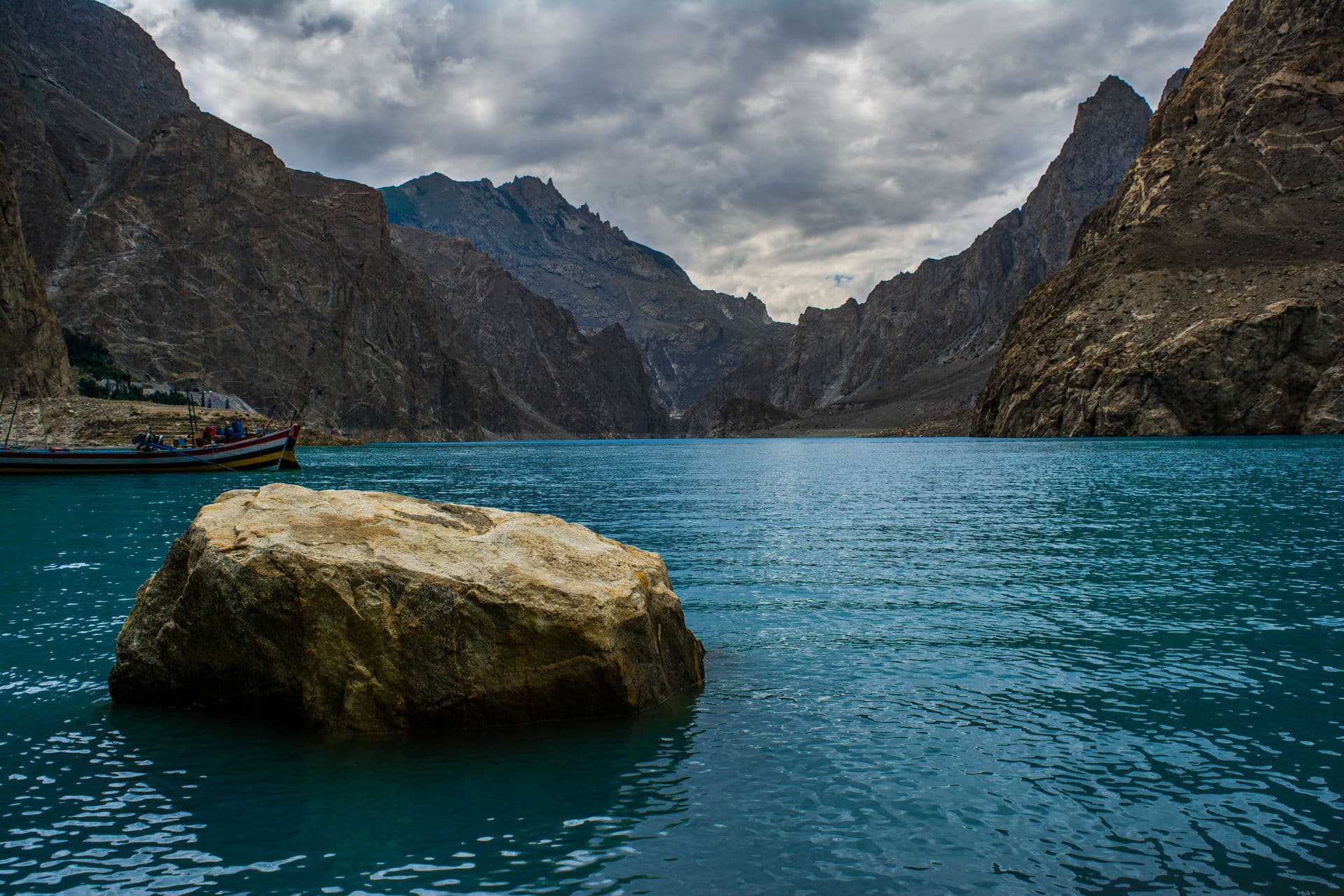
Three Ranges Tour: Karakoram, Himalayas & Hindu Kush
Karakoram Highway is one of the world’s most dramatic mountain roads, stretching from Hasan Abdal in Pakistan to the Khunjerab Pass on the China border. Carved through the meeting point of the Karakoram, Himalayas, and Hindu Kush ranges, it passes deep river gorges, towering peaks, and remote valleys shaped by the Indus River. Along the route lie iconic destinations such as Hunza Valley, known for its hospitality and breathtaking scenery, and cultural regions like the Kalash Valleys. The journey culminates at Khunjerab Pass, the highest paved international border crossing in the world, offering an unforgettable expedition through Pakistan’s northern mountain crown.
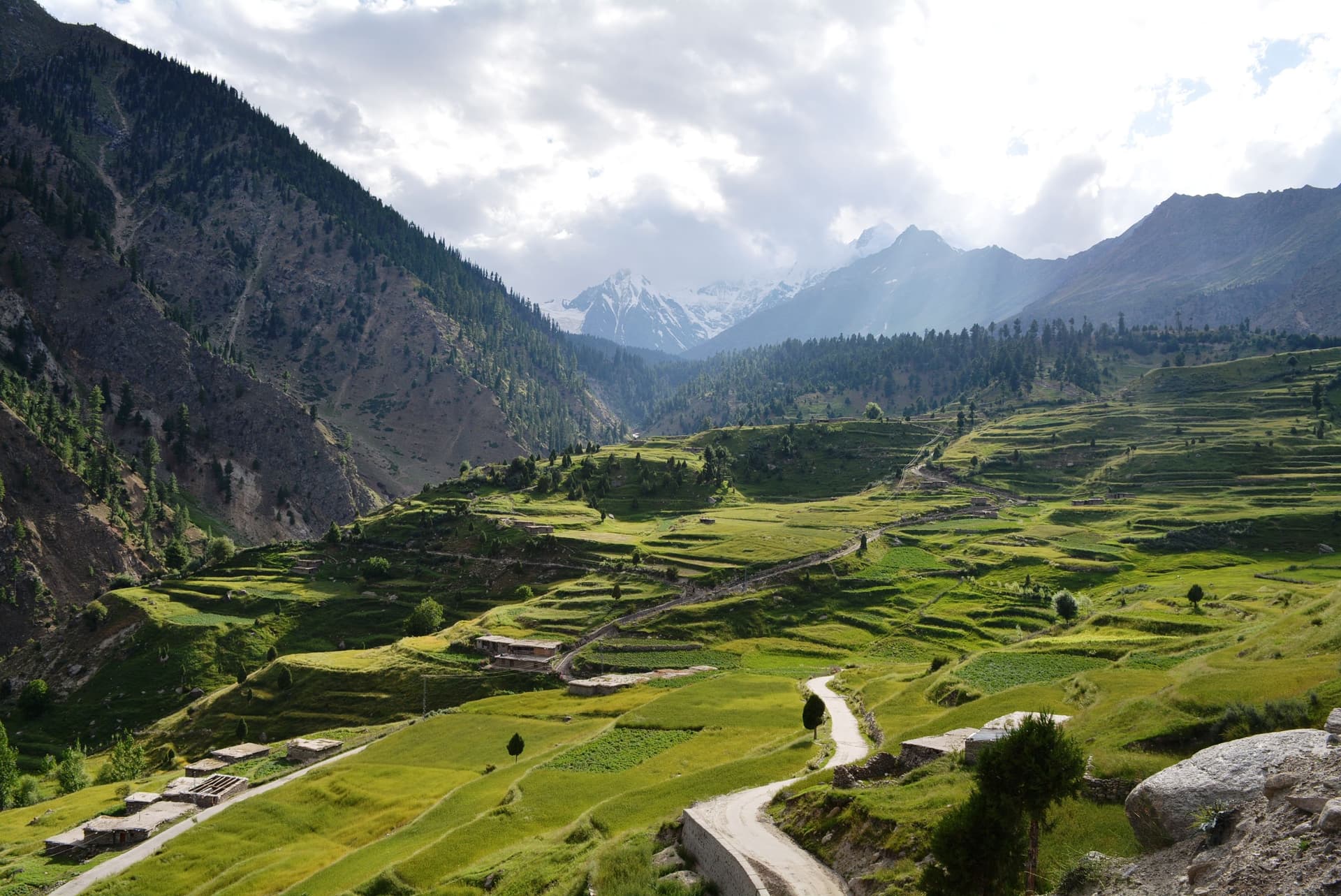
Summer Tour in Gilgit-Baltistan
Gilgit-Baltistan transforms into a vibrant high-altitude paradise during summer, when snowmelt feeds crystal-clear rivers, alpine lakes, and lush green valleys. From June to August, the region becomes fully accessible, revealing iconic destinations such as Hunza Valley, Skardu Valley, and Astore Valley at their most colorful. Meadows in places like Deosai National Park, Fairy Meadows, and Naltar Valley bloom with wildflowers, while events like the Shandur Polo Festival bring cultural energy to the mountains. With mild temperatures and long sunny days, summer is the peak season for trekking, camping, and exploring Pakistan’s most dramatic landscapes, from Attabad Lake to Khunjerab Pass.
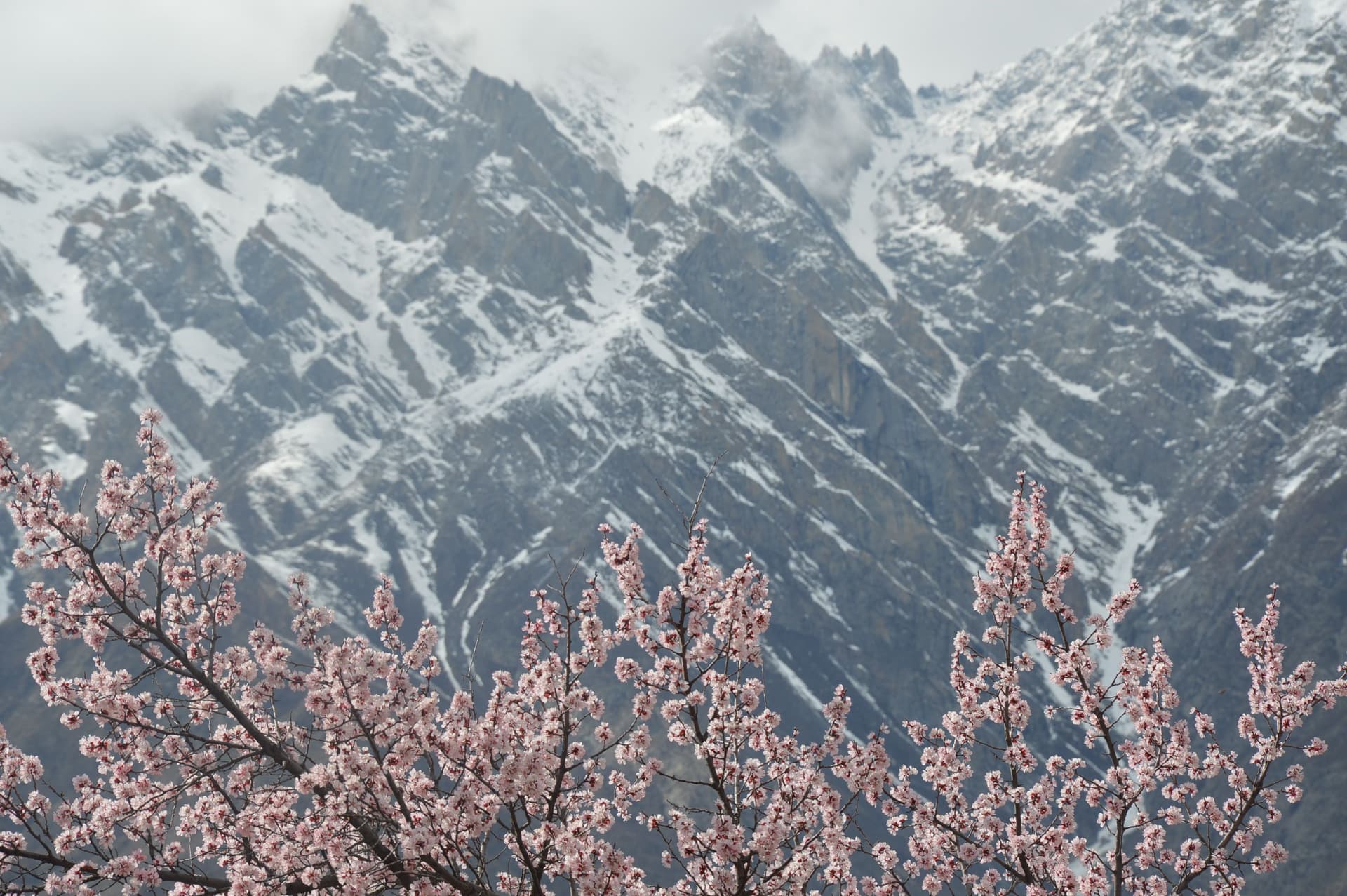
Spring Blossom Tour: Alpine Karakoram Adventure
Hunza Valley and the wider northern regions of Pakistan transform into a breathtaking landscape during spring, when apricot and cherry blossoms blanket the valleys in shades of pink, white, and green. From mid-March to April, orchards across Nagar Valley, Skardu Valley, and Baltistan come alive against the dramatic backdrop of snow-capped peaks like Rakaposhi and the Passu Cones. The season symbolizes renewal, with blooming fruit trees such as apricot, cherry, apple, and mulberry filling the air with fragrance and color. This spring blossom tour offers an easy, scenic experience for families and photographers, combining cultural warmth, peaceful village life, and some of the most stunning floral mountain landscapes in the world.
Starting from
Contact for Price