Latok I, II, III & IV Expedition
Conquer the Vertical Arena of Granite and Ice in the Panmah Muztagh
Latok I, II, III & IV Expedition
Conquer the Vertical Arena of Granite and Ice in the Panmah Muztagh
Conquer the Vertical Arena of Granite and Ice in the Panmah Muztagh
The window to climb in the Karakoram is brief, and the mountains do not wait. Alpine Karakoram Adventure invites experienced alpinists to join our Latok expeditions for the 2026 and 2027 seasons, with departures scheduled from July through August—the optimal weather window when the Panmah Muztagh offers its most stable conditions . Our 35-day expedition covers every detail from your arrival in Islamabad to your safe return, including all permits, logistics, Base Camp infrastructure, and professional support. The Latok group—comprising Latok I (7,145m), Latok II (7,108m), Latok III (6,949m), and Latok IV (6,456m)—represents one of the most visually arresting and technically demanding clusters of mountains in the world . Defined by sheer verticality and complex architecture, these peaks have captivated alpinists for decades and rebuffed some of the strongest climbing teams in history . Slots are strictly limited each season. Contact us to secure your place in this vertical arena of granite and ice.
Trip Stats
Difficulty
Hard
Max Altitude
7,145 meters
Wind Speed
40-60 km/h
Temperature
-25°C to -10°C
Overview
The Panmah Muztagh, a sub-range of the Central Karakoram, is home to one of the most visually arresting and technically demanding clusters of mountains in the world: the Latok group. Comprising Latok I at 7,145 meters, Latok II at 7,108 meters, Latok III at 6,949 meters, and Latok IV at 6,456 meters, these peaks are defined by their sheer verticality and complex architecture . Unlike the sprawling massifs of the 8,000-meter peaks, the Latok group is characterized by "Big Wall" phenomena—precipices of granite and ice that rise at angles often exceeding 70 degrees for vertical kilometers . It is a vertical arena where rock climbing prowess is as vital as high-altitude endurance. The region offers a mixture of extreme ice and rock climbing that has captivated alpinists for decades. While the skylines are dominated by these four giants, the surrounding terrain includes spectacular formations such as the Biacherahi Towers and Hanipispur. The approach via the Choktoi and Panmah Glaciers immerses climbers in a landscape of jagged spires and unstable snow mushrooms, offering a raw and pristine wilderness experience. For adventure lovers, the area remains a treasure trove of unclimbed faces and new lines, far removed from the commercial traffic of the Baltoro. Latok I, the highest of the group, presents a fortress of granite that has rebuffed some of the world's strongest climbing teams. The sheer scale of its North Ridge is legendary in the mountaineering community, representing one of the "last great problems" of the Himalaya-Karakoram for nearly forty years. The 1978 American expedition of Jim Donini, Michael Kennedy, George Lowe, and Jeff Lowe came within 400–500 feet of the summit on this ridge, a climb widely regarded as "The Most Remarkable Failure in Climbing History" . Kennedy later wrote of the experience: "The climbing was magnificent, ranging from 5.9 rock with the odd bit of aid to 85-degree ice, never desperate but always sustained. We spent four nights above 21,000 feet on tiny ledges hacked out of the ice, including one in a storm on the descent, the most horrible night I have ever spent in the mountains" . In August 2018, the trio of Aleš Česen (Slovenia), Luka Stražar (Slovenia), and Tom Livingstone (UK) finally succeeded in climbing the north side of Latok I, spending seven days on the mountain and climbing approximately three-quarters of the North Ridge before traversing to the west side to reach the summit . It marked only the second ascent of the mountain in history and earned the Piolet d'Or in 2019 . Livingstone described the climb: "In terms of numbers, the route was about 2400 meters of vertical height gain from glacier to summit. Bivies weren't excellent. We could move together over some ground, always aiming for the fastest, smartest and logical line. Where we pitched, we tried to be quick. Inevitably we encountered some pitches of hard/steep/rotten ice and mixed" . The Latok group's climbing history includes numerous bold ascents and tragic losses. Latok II was first climbed in 1977 by an Italian team, and in 1997 Alexander Huber, Thomas Huber, Toni Gutsch, and Conrad Anker climbed its sheer West Face, describing it as putting "El Capitan on top of Denali": a 1,000-meter vertical rock wall with a base at 6,100 meters . Latok III's 2,000-meter west face required 63 pitches when first climbed by a Russian team in 2011 . The region has also witnessed tragedy—British climbers Pat Fearneough (1978) and Don Morrison (1977) lost their lives on Latok II, and in 2018, Russian climber Sergey Glazunov fell to his death during descent on Latok I, leaving his partner Alexander Gukov stranded for seven days at 6,200 meters before helicopter rescue . Whether attempting the technical granite prow of Latok III or the mixed terrain of the higher peaks, an expedition here is a serious undertaking in one of the most savage and beautiful corners of Pakistan.
Trip Highlights
What makes this trekking special
Big Wall Alpinism: Climb in a region known for having some of the world's premier big walls, with vertical relief surpassing 2,000 meters on faces like Latok III's west face and Latok I's north ridge
The North Ridge: View and potentially attempt the legendary North Ridge of Latok I, a knife-edge of rock and snow mushrooms that defied complete ascent for decades until the 2018 Slovenian-British success
Multiple Objectives: Opportunity to attempt various peaks within the cluster—Latok I, II, III, or IV—or explore the unclimbed faces of satellite peaks like Biacherahi Dome and Hanipispur
Technical Granite: High-quality granite climbing on Latok III, including the 3,000-foot prow first climbed in 1979, and on Latok II's west face, described as "El Capitan on top of Denali"
Choktoi Glacier: Camp on the Choktoi Glacier, surrounded by a natural amphitheater of spires including the Ogre (Baintha Brakk) and the Latoks, at approximately 4,500 meters
Historical Significance: Walk in the footsteps of legendary climbers—Jim Donini, Michael Kennedy, the Lowe brothers, Doug Scott, Alexander Huber, Conrad Anker, and the 2018 Piolet d'Or-winning team
Trekking Approach: A scenic and less-traveled trekking route from Askole through Upper Jhola, Donglonba, and Lamidokpa, far from the crowded Baltoro Highway
Unclimbed Terrain: Plenty of opportunity for first ascents on secondary ridges and faces that remain untouched, particularly on the lesser-visited aspects of Latok IV
Remote Wilderness: A quieter expedition experience compared to Concordia, offering solitude and intense engagement with the environment
Pristine Campsites: Camping at locations like Lamidokpa which offer respite before the harsh glacial environment of Base Camp
Proximity to Snow Lake: Close to the Sim La and the vast glacial basin of Snow Lake (Lukpe Lawo), one of the world's largest glacier systems outside the polar regions
Day by Day Itinerary
Most international flights land at Islamabad International Airport. Our team meets you at arrivals, handles the welcome, and transfers you to your accommodation. The rest of the day is yours...
Morning visit to the Ministry of Tourism for official expedition briefing and permit processing. This is mandatory for all expeditions in Pakistan. We meet our Liaison Officer, who accompanies the...
Early start for the 45-minute flight to Skardu—one of the most spectacular commercial flights anywhere. On clear days, you see Nanga Parbat sliding past your window. Flights cancel frequently; Skardu...
Skardu is the capital of Baltistan and gateway to the Karakoram peaks. We use this day for final logistics: briefing at the Ministry of Tourism, permit verification, load planning with...
We load jeeps and begin the drive. The road follows the Indus River, branches along the Shigar, then follows the Braldu deeper into the mountains. The jeep road crosses the...
First trekking day, approximately 5–6 hours. We leave Askole and follow the trail toward the junction of the glaciers. Walk through Askole and past the confluence of the Biafo and...
Trek from Chanchikon to the campsite at Donglonba as you move deeper into the Panmah system. The route follows the moraine-covered Biafo Glacier with views of Pyramidal Baakhor Das Peak...
Trek from Donglonba to Lamidokpa at approximately 3,900 meters. The terrain becomes increasingly glaciated with spectacular views of the Latok spires beginning to appear. Trek duration approximately 5–6 hours .
Trek from Lamidokpa to the Latok I, II, III & IV Base Camp situated on the Choktoi Glacier at approximately 4,500 meters . From Mango we get on the white...
Well-earned rest day. Technical training on big wall techniques, ice climbing, and crevasse rescue. Local staff perform a Puja Ceremony—a blessing for safe passage—with prayer flags and traditional rituals. Gear...
Twenty days dedicated to climbing activities. This includes the establishment of Advanced Base Camp (ABC) and higher camps, technical route fixing on granite and ice, acclimatization, and summit attempts on...
Climbing period concludes. Clean up Base Camp thoroughly, ensuring all environmental protocols are met and no trace is left behind . Trek back down the glacier to Lamidokpa. Trek duration...
Trek from Lamidokpa back to Upper Jhola (Chanchikon). Trek duration approximately 5–6 hours .
Final trek from Chanchikon back to Askole village. Trek duration approximately 5–6 hours . Farewell dinner with the porter team, celebrating the completion of the expedition and expressing appreciation for...
Jeep drive from Askole back to Skardu. First hot shower and comfortable rest after weeks in the mountains . Check into hotel for a well-earned night of comfort.
Official de-briefing at the Ministry of Tourism and final farewell dinner with the expedition staff . Process final documentation and celebrate the expedition's achievements.
Fly to Islamabad if weather permits. Board the plane for the spectacular flight out of the valley, once again passing Nanga Parbat before turning south. If the flight cancels, drive...
Reserved for delays—cancelled flights, road blocks, or bureaucratic requirements. If already in Islamabad, this becomes recovery time, shopping for souvenirs, final paperwork, and additional rest. The flight to Skardu is...
After breakfast, transfer to Islamabad International Airport for your international departure. The Latok expedition concludes.
Note: The climbing period of 20 days is a flexible guideline and can be adjusted based on the expedition's specific goals and weather conditions . The approach via the Choktoi Glacier involves traversing complex and remote glacial terrain. Flight cancellations are common in Northern Pakistan; the team must be prepared for road travel on the Karakoram Highway . The Latok group's climbing history includes numerous attempts turned back by weather, technical difficulty, and objective hazards . Patience for proper weather windows is essential for a safe summit. As the 1978 American team demonstrated, even near-success can become a desperate retreat. Your expedition leader works to minimize inconvenience while maintaining safety as the top priority.
What's Included
Included
13 items included
- Professional airport pickup and drop-off at Islamabad International Airport
- Domestic flights Islamabad-Skardu-Islamabad (subject to weather; road contingency via Karakoram Highway if cancelled)
- All accommodation (hotels in Islamabad/Skardu/Chilas, camping during trek)
- All meals from welcome dinner through departure breakfast
- Transportation between Skardu – Askole – Skardu by jeep
- Full processing of expedition permits and government documentation
- Porter and staff support from Askole to Base Camp including wages, insurance, food, and equipment (75kg per member up, 50kg down)
- Complete Base Camp infrastructure with individual member tents, mess tent, kitchen tent, store tent, office tent, toilet tent, tables, chairs, and kitchen utensils
- Licensed professional guide and Liaison Officer kit allowance, food, and flight fare
- All camping fees, road taxes, and bridge crossing fees
- CKNP waste management fee
- Royalty fees and additional member fees as per government regulations
- All taxes and service charges
Not Included
13 items not included
- International flights to and from Pakistan
- Pakistan mountaineering visa fee
- Mandatory travel and high-altitude rescue insurance (must cover helicopter evacuation up to 7,500m)
- Helicopter emergency rescue fees (refundable deposit required)
- Personal climbing equipment, technical hardware, and clothing
- Personal expenses: telephone calls, laundry, soft drinks, alcoholic beverages
- High altitude tents and high altitude food
- High-altitude porters (HAPs)
- Sleeping bags and all personal items of a purely personal nature
- Custom clearing charges for import/export of personal equipment
- EPI gas canisters and oxygen cylinders
- Tips for Base Camp staff, porters, and local crew (customary, amount at your discretion)
- Unforeseen costs due to roadblocks, extra hotel stays, or extended Base Camp stays
We understand that every climber has unique needs and different experience levels. The inclusions above represent our standard expedition package. However, Alpine Karakoram Adventure can customize your plan with additional support or private arrangements.
What Our Adventurers Say
Authentic reviews from fellow trekkers who completed this expedition
Based on 0 reviews
Be the first to review this expedition!
Similar Expeditions
Discover more incredible adventures in the Karakoram
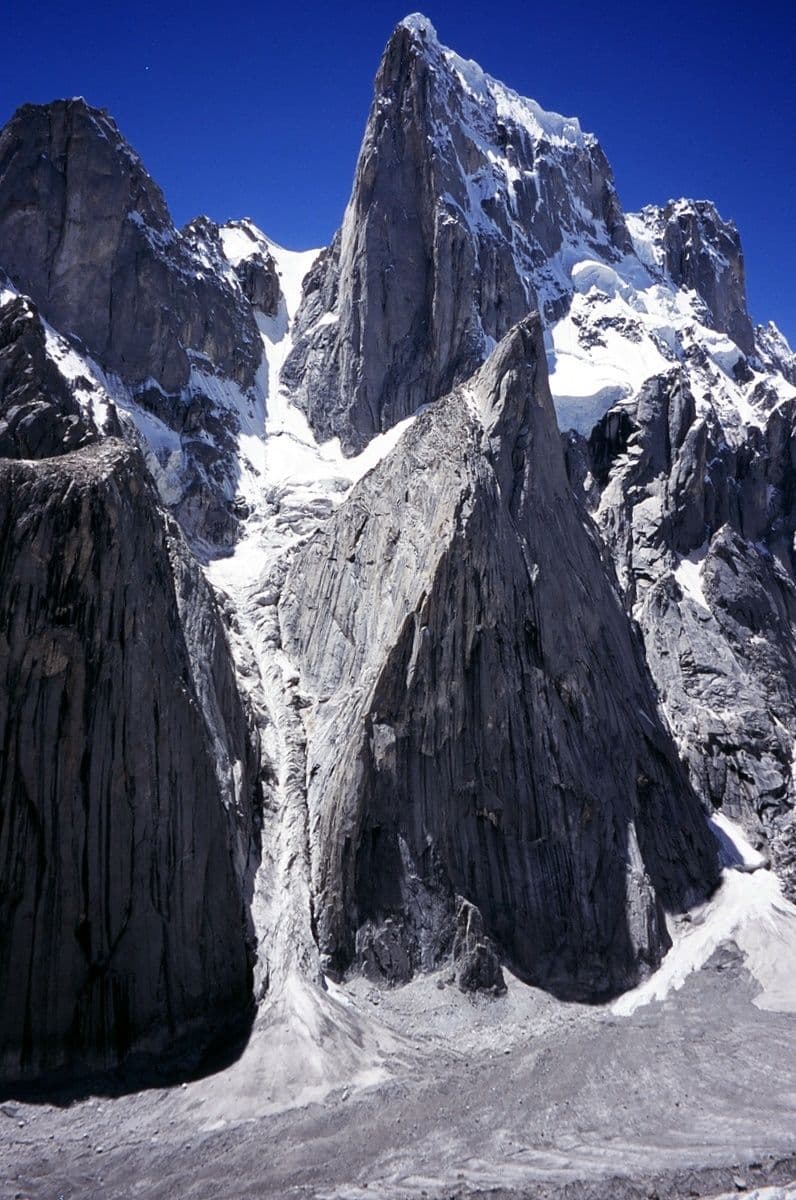
Uli Biaho Expedition
The granite spires of Uli Biaho rise from the Baltoro Glacier like frozen lightning, their sheer walls creating one of the most captivating formations in the entire Karakoram. Situated directly beside the legendary Trango Towers, this twin-summit massif offers elite climbers a choice between two distinct objectives: the higher Uli Biaho Peak (6,417m) with its mixed terrain and unclimbed history until 2006, or the technical Uli Biaho Tower (6,109m) with its vertical granite walls and established big wall routes . Alpine Karakoram Adventure invites experienced climbers to join our Uli Biaho expeditions for the 2026 and 2027 seasons, with fixed departures scheduled from May through August—the optimal weather window when conditions are most stable for technical climbing at altitude . Our 30-day expedition covers every detail from your arrival in Islamabad to your safe return, including all permits, logistics, Base Camp infrastructure, and professional support. Slots are strictly limited for this remote and technical objective. Contact us to secure your place on one of the Karakoram's most magnificent granite formations.
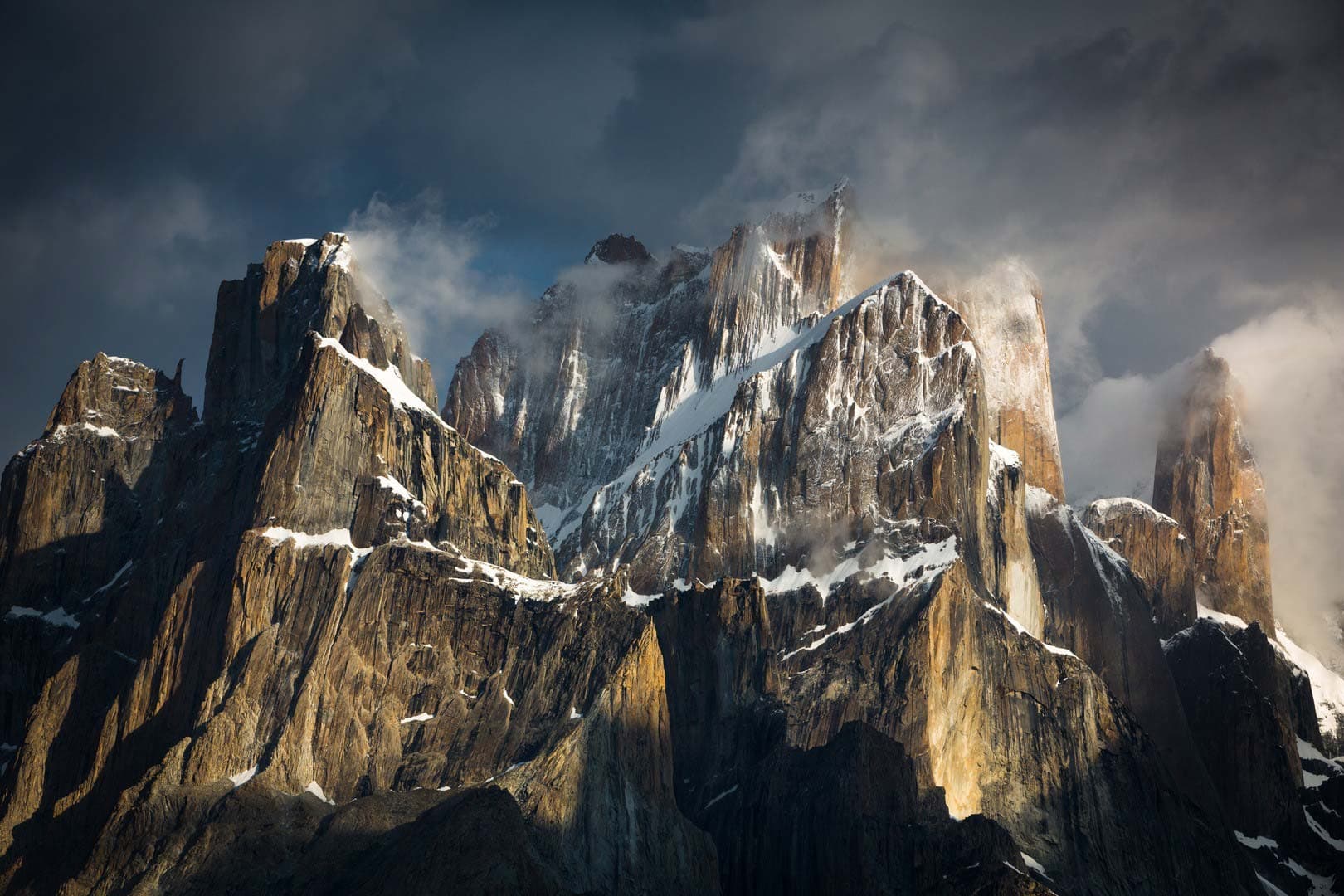
Trango Towers Expedition
The window to climb in the Karakoram is brief, and the mountains do not wait. Alpine Karakoram Adventure invites experienced alpinists to join our Trango Towers expeditions for the 2026 and 2027 seasons, with departures scheduled from July through August—the optimal weather window when the Karakoram offers its most stable conditions . The Trango Towers, rising magnificently north of the Baltoro Glacier, form one of the most spectacular collections of granite spires on Earth, featuring some of the world's largest cliffs and most challenging big wall climbing opportunities . Our 38-day expedition covers every detail from your arrival in Islamabad to your safe return, including all permits, logistics, Base Camp infrastructure, and professional support. Slots are strictly limited each season. Contact us to secure your place on these legendary granite giants.

The Ogre (Baintha Brakk) Expedition
The granite monolith known as The Ogre rises from the heart of the Panmah Muztagh like a fortress from another world—a jagged, vertical thumb of rock that has repelled more than twenty expeditions for every one that has succeeded. Baintha Brakk I, standing at 7,285 meters, is universally regarded as one of the most formidable and technically demanding peaks in the entire Karakoram, a mountain where the margin for error does not exist and where the climbing history reads like a chronicle of survival against impossible odds . Alpine Karakoram Adventure invites elite alpinists to join our Baintha Brakk expeditions for the 2026 and 2027 seasons, with fixed departures scheduled from July through early September—the brief weather window when conditions are most stable for attempting this beast of the Karakoram . Our 39-day expedition covers every detail from your arrival in Islamabad to your safe return, including all permits, logistics, Base Camp infrastructure, and professional support. Slots are strictly limited for this exclusive objective. Contact us to secure your place on one of the hardest mountains on earth.
Starting from
Contact for Price