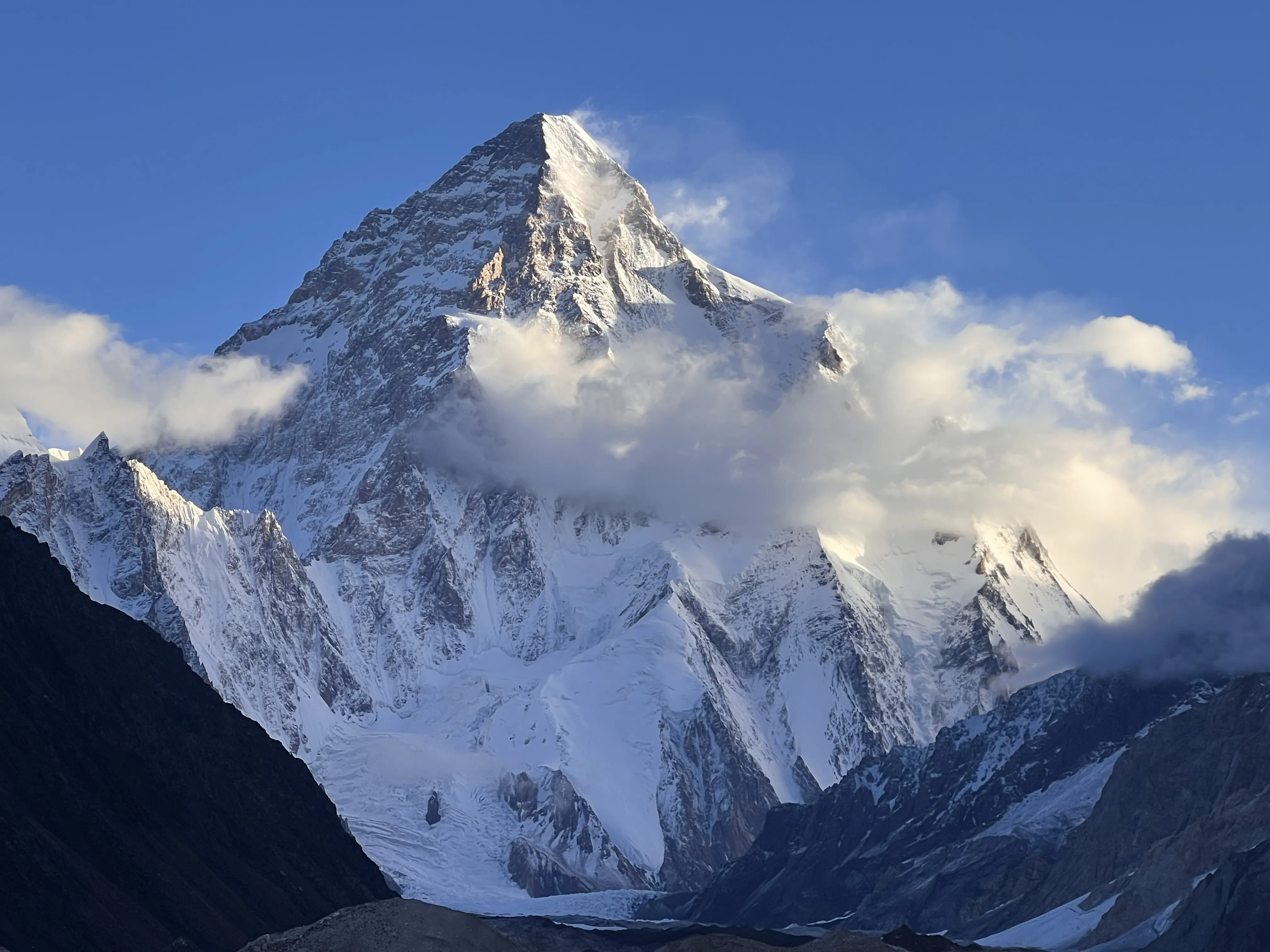
Latok Group Expedition – Latok I, II, III and IV, Karakoram
Book Your 2027 & 2028 Latok Group Expedition
Latok Group Expedition – Latok I, II, III and IV, Karakoram
Book Your 2027 & 2028 Latok Group Expedition
Book Your 2027 & 2028 Latok Group Expedition
A 38-day expedition to the Latok group in the Panmah Muztagh: Latok I (7,145 m), Latok II (7,108 m), Latok III (6,949 m) and Latok IV (6,456 m). Four walking days from Askole across the Biafo Glacier to base camp at about 4,200 m, then 20 days of climbing on some of the hardest granite walls at altitude.
Trip Stats
Difficulty
Extreme
Max Altitude
7,145 meters
The Latok group is four granite peaks in the Panmah Muztagh, east of the Ogre group and between the Choktoi Glacier to the north and the Baintha Lukpar Glacier to the south. Latok I is the highest at 7,145 m, with Latok II at 7,108 m, Latok III at 6,949 m and Latok IV at 6,456 m. They are steep rather than sprawling: the north ridge of Latok I runs about 2,500 m from the glacier, the west face of Latok III about 2,000 m, and the west face of Latok II about 1,000 m of rock starting at 6,100 m. Latok II was the first of the group to be climbed, by an Italian team in 1977, and Latok I has been climbed only twice. The trip runs from Islamabad to Skardu by air, then by jeep to Askole at about 3,000 m, and on foot for four days up the Biafo Glacier through Jhola, Namla and Mango to base camp at about 4,200 m below the group, within sight of the Ogre. Parties attempting the north ridge instead camp on the Choktoi Glacier at about 4,000 m, as the 1991 British expedition did below Hanipispur South. Twenty days are set aside for climbing, with base camp, kitchen and staff running throughout; teams carry their own loads above base camp, choose their own objectives and make their own calls on style and retreat. This is not guided climbing, and no itinerary can promise a summit. The climbing is hard by any standard. Latok I's north ridge was attempted first in 1978 by Jim Donini, Michael Kennedy, George Lowe and Jeff Lowe, who spent twenty-six days on the ridge and turned back roughly 150 m below the summit, and it stood for forty years: some thirty teams tried and failed before Aleš Česen, Luka Stražar and Tom Livingstone reached the summit from the north on 9 August 2018, taking the ridge for about two thirds of the way and finishing through the col between Latok I and Latok II. That ascent won the Piolet d'Or in 2019; the full ridge is still unclimbed. The group's losses are part of the record too: Igor Barikhin was killed by rockfall at 6,200 m on Latok III in 2001, and Sergey Glazunov died on Latok I in 2018. Helicopter rescue cannot be counted on, rockfall and unstable snow are constant hazards, and a 7,000 m wall in the Karakoram gives very little margin for a late decision.
Expedition Highlights
Key landmarks, features, and route experiences
Latok I (7,145 m) and its 2,500 m north ridge
The 2018 second ascent of Latok I from the north
Latok II's 1997 west face by Huber, Huber, Gutsch and Anker
Latok III's 2,000 m west face, climbed in 2011
Four walking days from Askole across the Biafo Glacier
Base camp below the Ogre and the Latok walls
We meet you at the airport and drive you to the hotel. The rest of the day is for sleep, and in the evening we go through the schedule, the permit file...
Silver Package
Standard support with shared base camp, cook and group logistics
Gold Package
PopularAdds extra ropes, a larger base camp and additional staff
Platinum Package
Private expedition with dedicated staff, satellite communication and custom logistics
What's Included & Excluded
Detailed breakdown of covered expedition logistics versus individual client responsibilities.
Included in Expedition
- Airport pickup and drop-off
- Hotels in Islamabad and Skardu, camping on trek and at base camp
- All meals, plus base camp kitchen, tents and staff
- Domestic flights Islamabad-Skardu-Islamabad, road transfer if cancelled
- Jeep transport Skardu-Askole-Skardu and porter allowance
- Climbing permit, royalty, liaison officer, park fees and porter insurance
Excluded (Client Account)
- International flights
- Pakistan visa fee
- Travel and rescue insurance to 7,500 m
- Personal climbing gear, ropes and high-altitude tents
- High-altitude food and fuel above base camp
- Personal expenses and unforeseen delays
Complementary Expeditions
Explore adjacent climbing routes, customized trails, and remote alpine passes.
Uli Biaho Tower Expedition – Baltoro Granite Big Wall
A 37-day big wall expedition to Uli Biaho Tower (6,109 m) above the Trango Glacier. Three walking days from Askole to base camp at about 4,000 m, then 21 climbing days on the tower whose 34-pitch east face was the first Grade VII climbed by an American team.
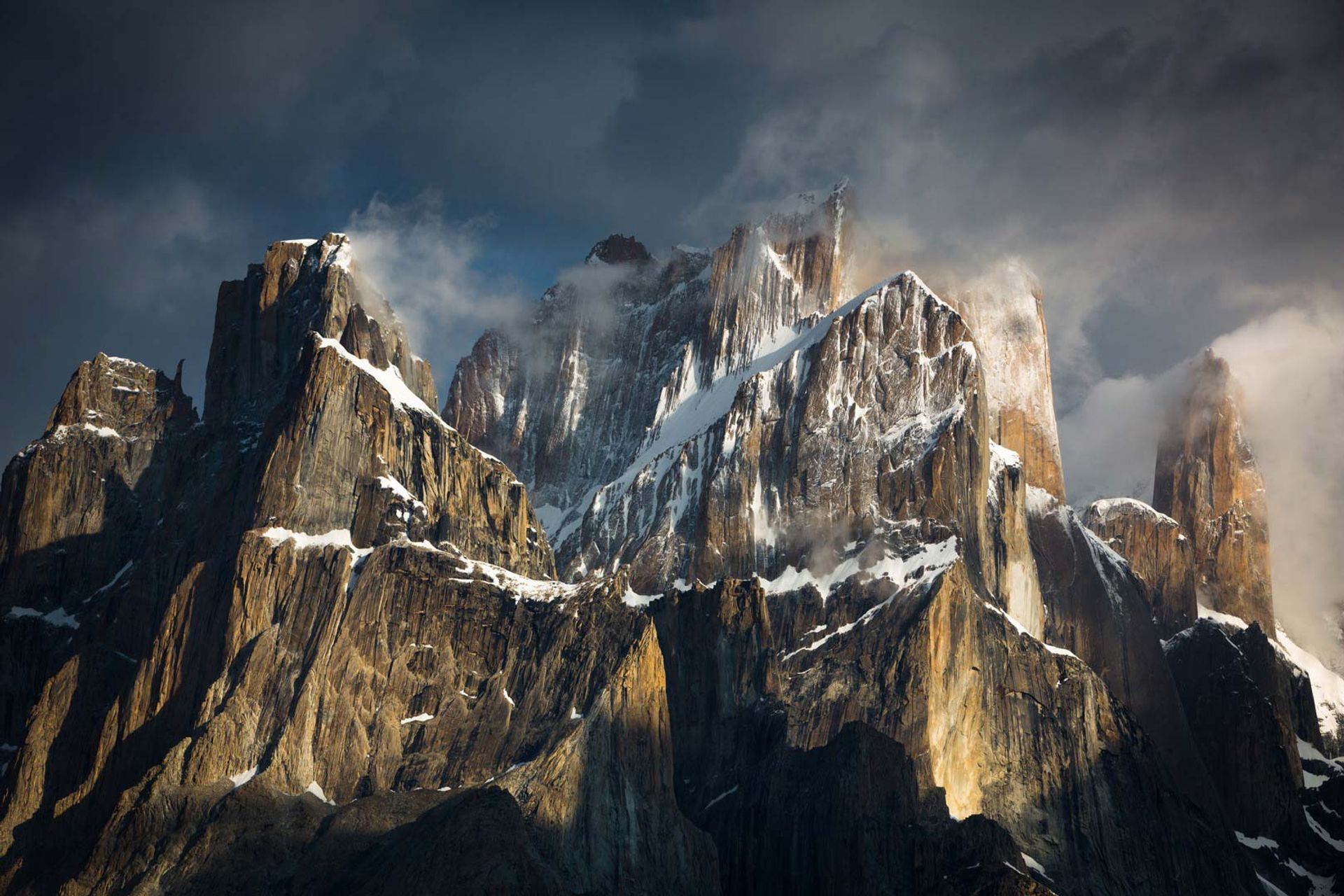
Trango Towers Expedition – Great Trango & Nameless Tower, Karakoram
A 38-day big wall expedition above the Baltoro Glacier. Three walking days from Askole to base camp at about 4,000 m, then 21 climbing days on Great Trango (6,286 m), Nameless Tower (6,239 m) and the other Trango spires.
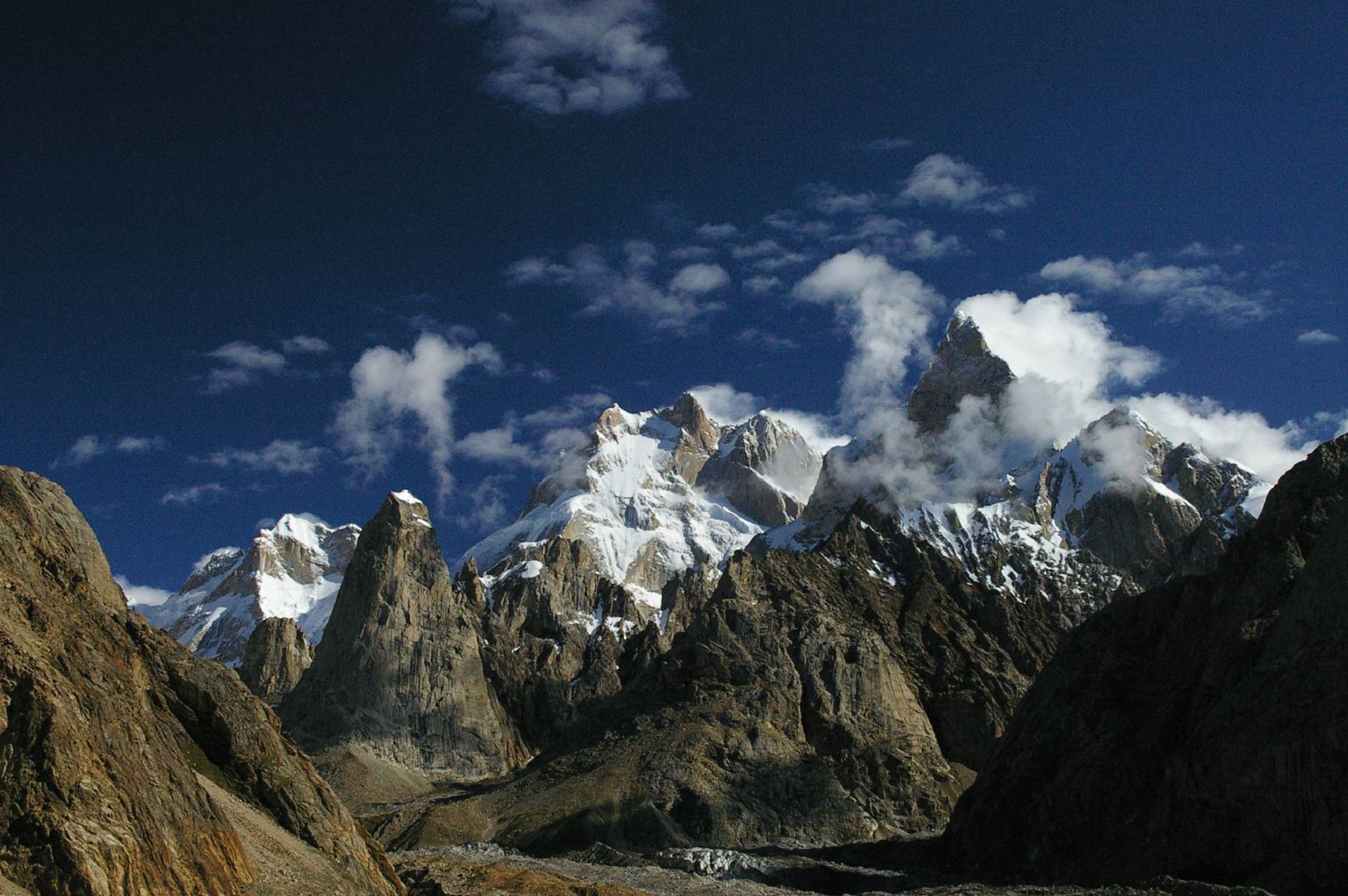
The Ogre (Baintha Brakk) Expedition – Panmah Muztagh, Karakoram
A 41-day expedition to Baintha Brakk I (7,285 m), known as The Ogre, in the Panmah Muztagh. Biafo Glacier approach, base camp at about 4,200 m, then 24 days of technical climbing on a peak with only three recorded ascents.