Khane Valley Expedition – Big Walls Beside Nangma Valley, Karakoram
Book Your 2027 & 2028 Khane Valley Expedition
Khane Valley Expedition – Big Walls Beside Nangma Valley, Karakoram
Book Your 2027 & 2028 Khane Valley Expedition
Book Your 2027 & 2028 Khane Valley Expedition
A 31-day expedition into the Khane Valley in the Tagas group of the Masherbrum mountains, reached by road to Khane village at 2,800 m and two days of walking to base camp on the First Terrace at 4,050 m. Eighteen climbing days on granite walls and unclimbed spires, with Hasho Peak II at 6,080 m the highest summit in the valley.
Trip Stats
Difficulty
Extreme
Max Altitude
6,080 meters
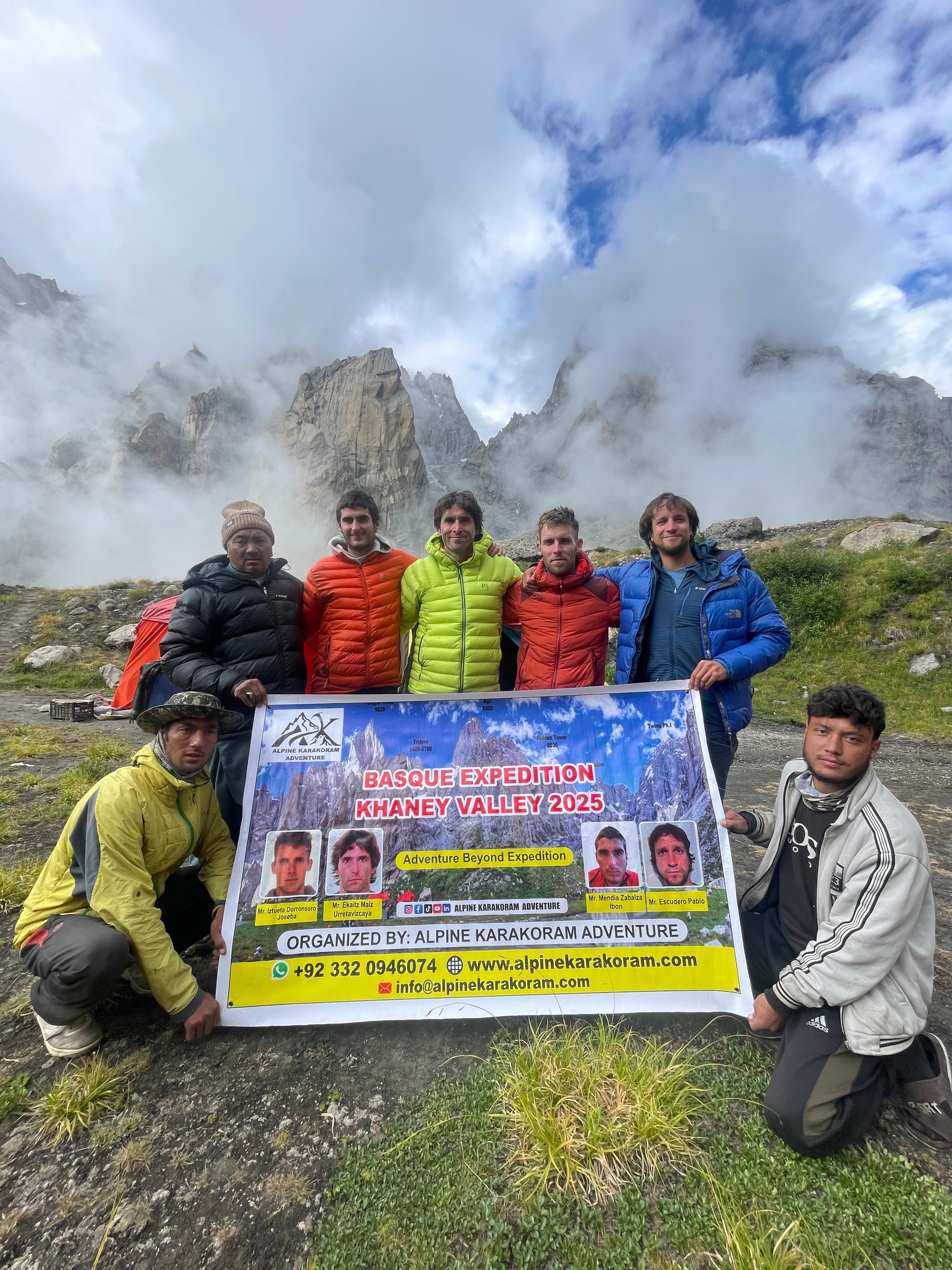
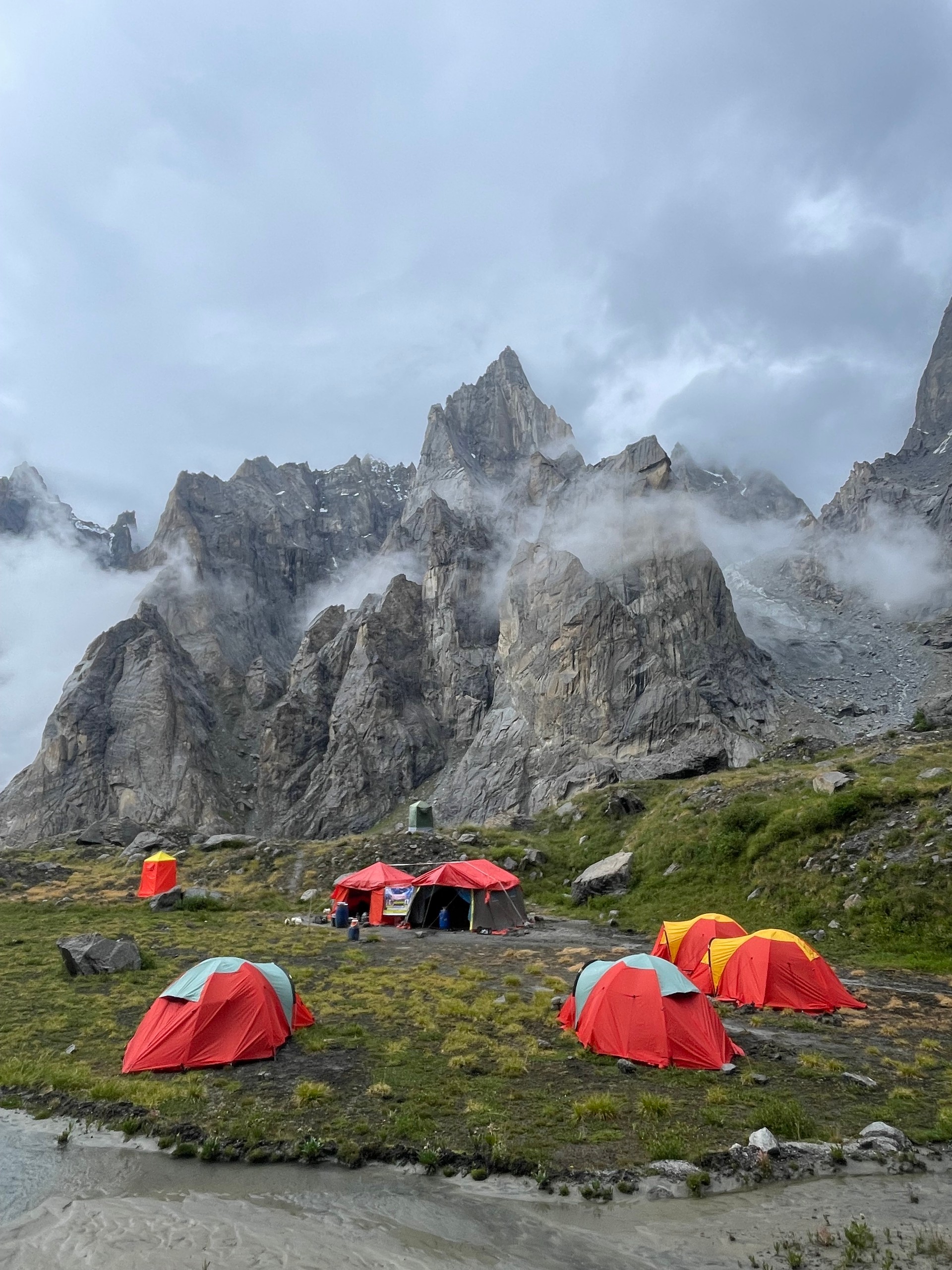
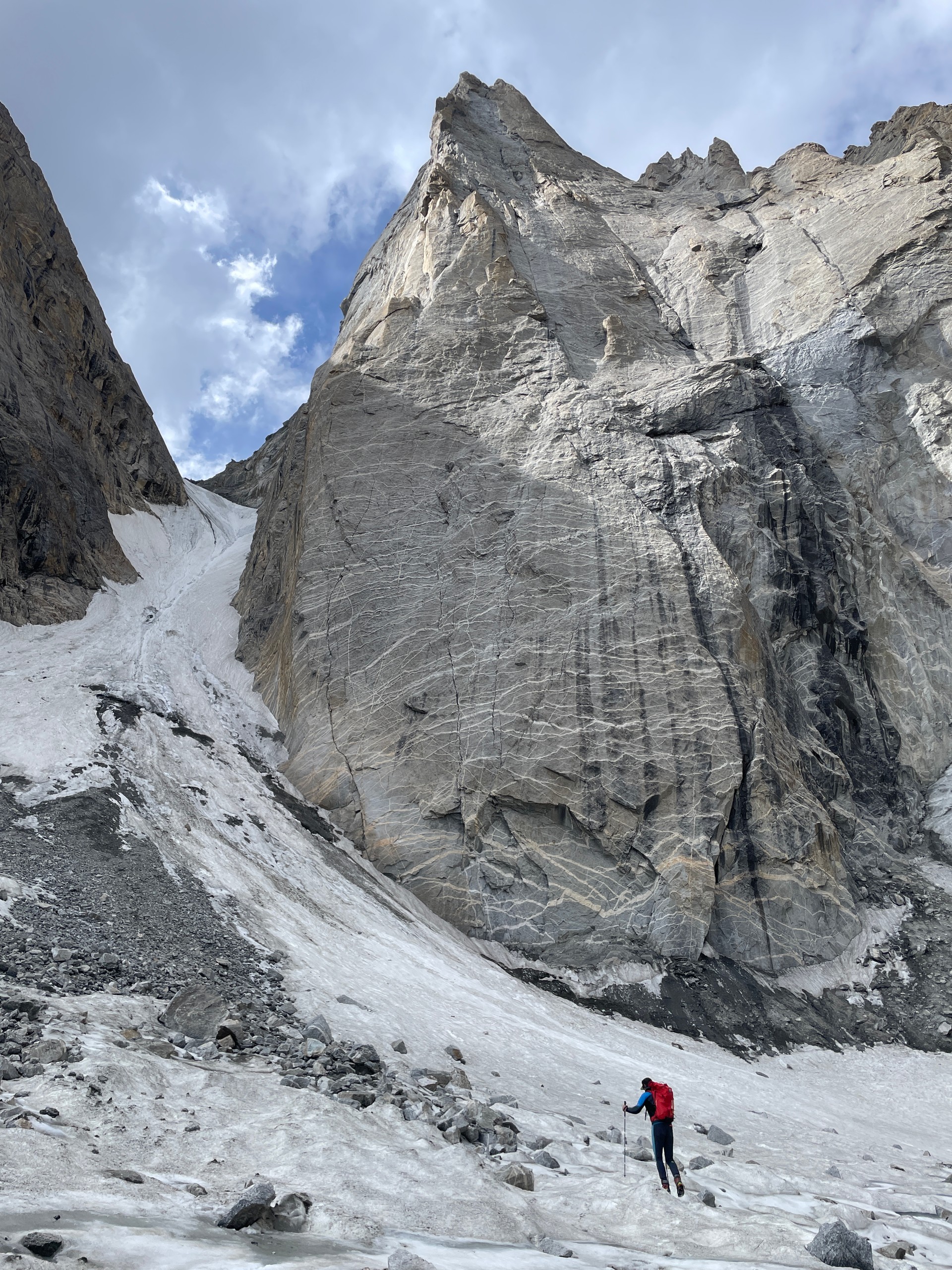
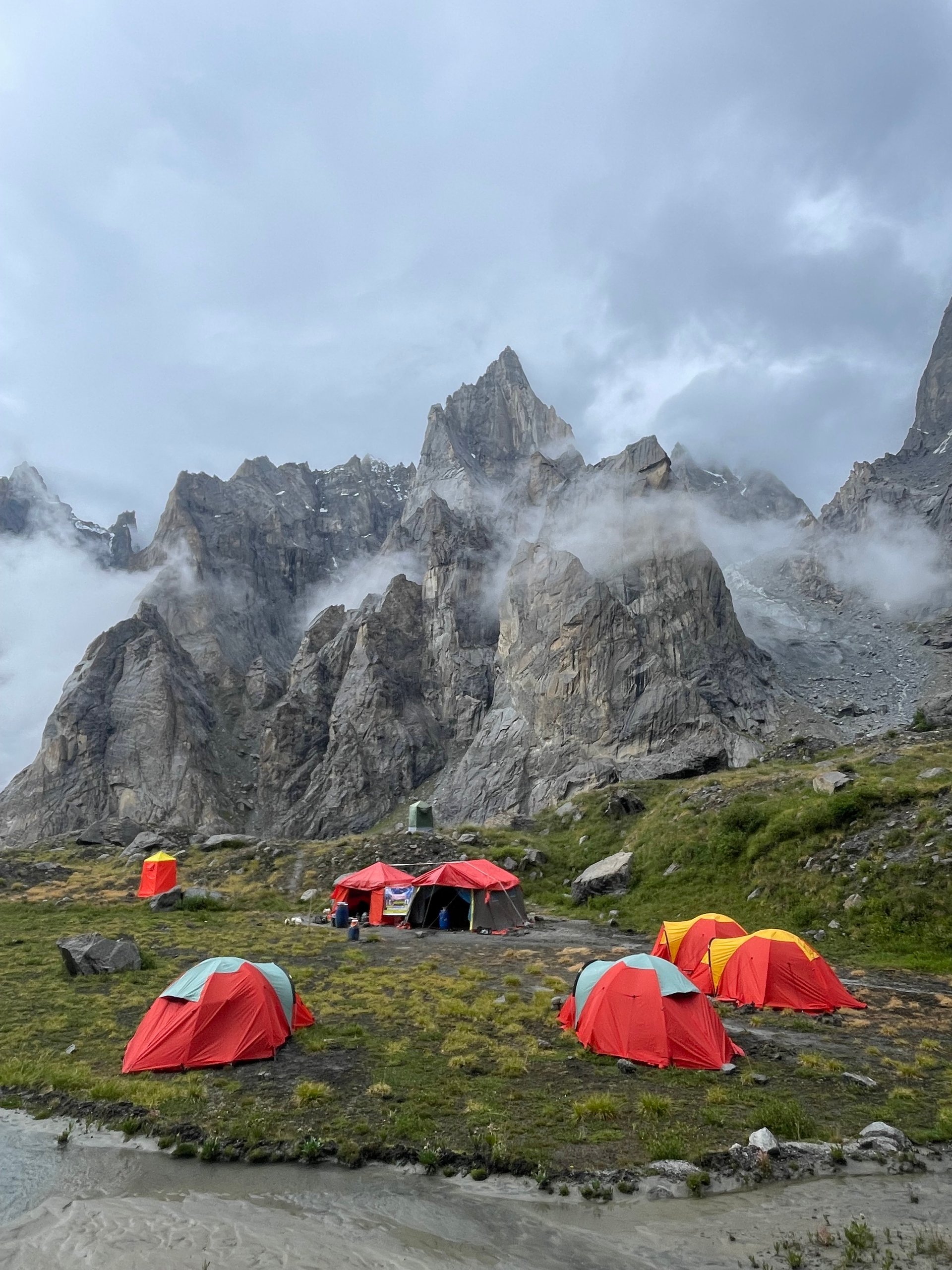
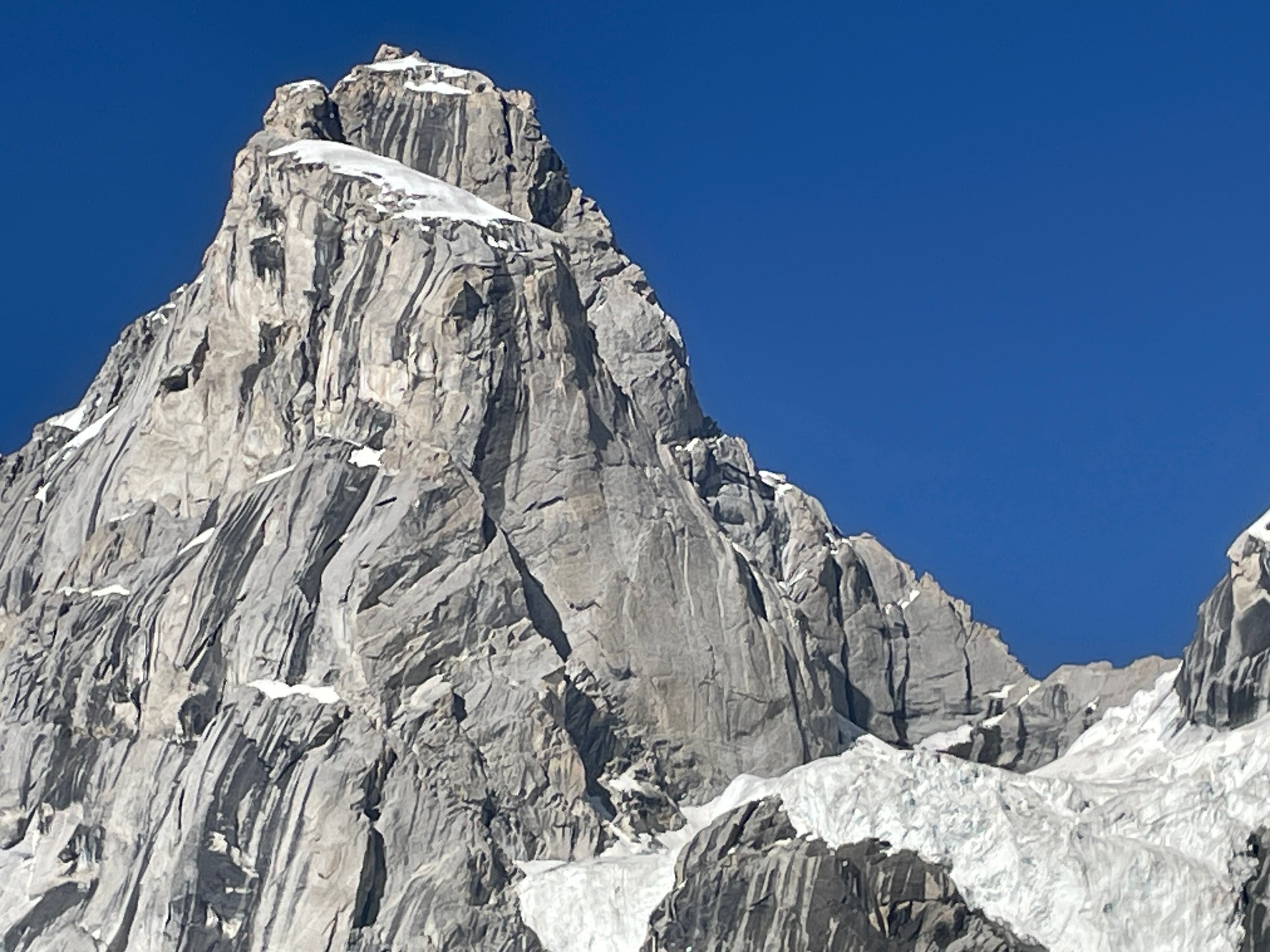
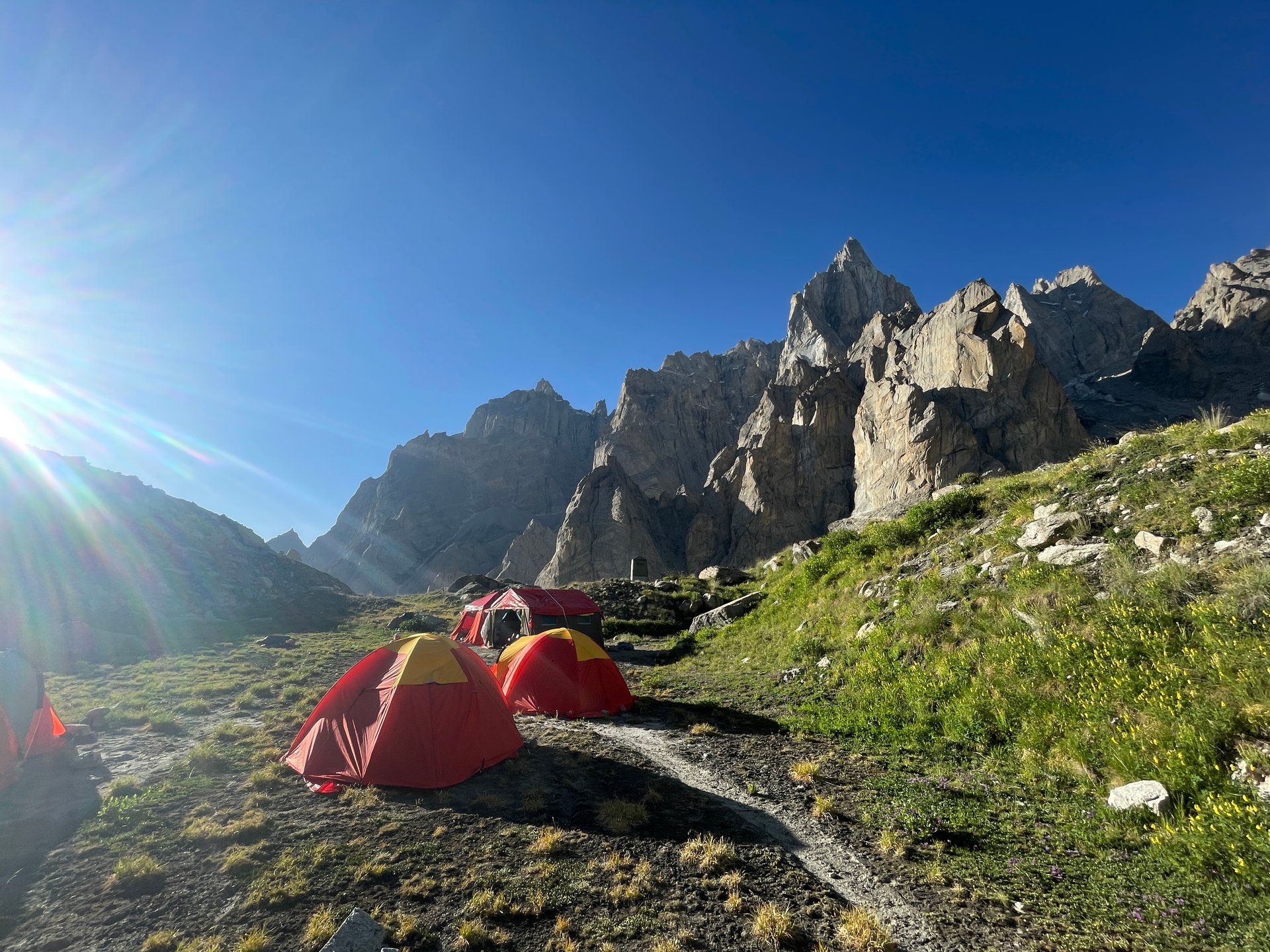
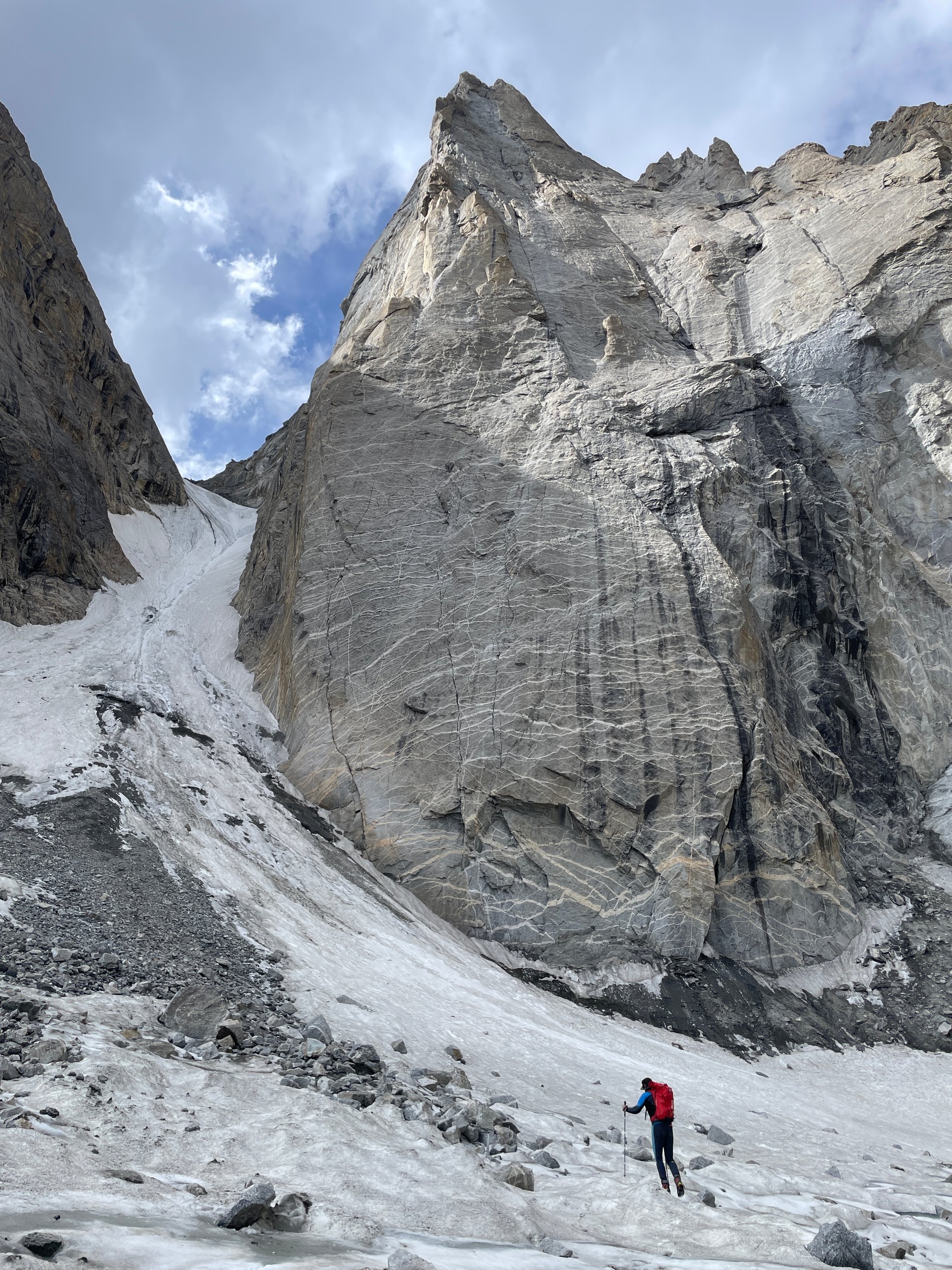
The Khane Valley sits immediately south of the Nangma Valley in Baltistan, in the part of the Masherbrum mountains that Jerzy Wala's 2012 map calls the Tagas group, with the Tagas and Lachit valleys on its other side. A side road off the Hushe road ends at Khane village at 2,800 m, the last place reachable by vehicle, and the valley above it climbs through the First Terrace, a grassy plain at about 4,000 m where most expeditions camp, then the Second Terrace and a chain of cwms up to the Khane Glacier and an icefall at about 4,900 m. The walls are granite. Hasho Peak II is the highest summit in the valley at 6,080 m; Tangra Tower stands at about 5,820 m; the Bulgarians measured Levski Peak at 5,733 m and Grey Tower at 5,435 m; and the Great Tower, Shingu Charpa at 5,910 m, sits on the divide with Nangma. Between them are numbered peaks that still have no routes, which is the reason to come. The valley's recorded climbing history is short. A Bulgarian team explored it in 2011 and returned in August 2012, when Doychin Boyanov, Tervel Kerelov, Michail Michailov and Nikolay Petkov made the first ascents of Levski Peak by its 650 m west face at M6, AI4, 6a, and of Grey Tower by a 600 m east ridge at 6b; a Russian team, mostly from Krasnoyarsk and Moscow, came in July 2019 and climbed Hasho Peak II by the west flank and south-southeast ridge on 23 July, then Tangra Tower's 800 m southeast face over three days with a portaledge at 6B and 6c+/7a A4, and the south peak of the Thumb. Smaller parties have come and gone in between, including a 2015 Italian expedition that made the first ascent of Peak 45, now called Shorsa Tower I, by a 300 m east ridge, and in September 2025 a Japanese trio climbed Hasho Peak II's east face from the Lachit side, only the second ascent of the mountain. Repeat ascents are still rare, and the valley is quiet in a way the Charakusa and Nangma are not. The climbing ranges from 300 m multi-pitch routes on towers above the valley floor to 800 m walls at 6,000 m, and eighteen days suit two objectives rather than a long siege. Teams carry their own ropes and protection, fix their own lines and sleep on the wall where the route needs it. There are real caveats. The 2015 Italian team found the Khane Glacier icefall impractical in the heat of their visit, with constant ice and stonefall, and abandoned an attempt on Peak 42's south face after one pitch when the cracks turned out to be filled with dirt and grass; the Bulgarians rated the last 300 m to the col below Grey Tower as dangerous from rockfall and climbed it early in the morning. Add 4,050 m of base camp altitude, walls going to 6,080 m, and a helicopter that may not be able to fly in cloud, and the margin for a late decision is small. The season runs from late June into September, with July and August the settled months. This is exploratory climbing, not a guided ascent, and no one can promise a summit in a valley where some of the best lines are still unclimbed.
Expedition Highlights
Key landmarks, features, and route experiences
Tangra Tower (5,820 m) and its 800 m southeast face
Hasho Peak II (6,080 m), the highest summit in the valley
Levski Peak (5,733 m) and Grey Tower (5,435 m), first climbed in 2012
Base camp on the First Terrace at 4,050 m
Shingu Charpa, the Great Tower (5,910 m), from its quiet southern side
Numbered peaks and unclimbed spires above the valley floor
We meet you at the airport and drive you to the hotel. The rest of the day is for sleep, and in the evening we go through the plan, the permit file...
Silver Package
Standard support with shared base camp, cook and group logistics
Gold Package
PopularAdds extra ropes, a larger base camp and additional staff
Platinum Package
Private expedition with dedicated staff, satellite communication and custom logistics
What's Included & Excluded
Detailed breakdown of covered expedition logistics versus individual client responsibilities.
Included in Expedition
- Airport pickup and drop-off
- Hotels in Islamabad and Skardu, camping on trek and at base camp
- All meals, plus base camp kitchen, tents and staff
- Domestic flights Islamabad-Skardu-Islamabad, road transfer if cancelled
- Jeep transport Skardu-Khane-Skardu and porter allowance
- Trekking and climbing permits, road fees and porter insurance
Excluded (Client Account)
- International flights
- Pakistan visa fee
- Travel and rescue insurance to 6,500 m
- Personal climbing gear, ropes and protection
- Food and fuel above base camp
- Personal expenses and unforeseen delays
Complementary Expeditions
Explore adjacent climbing routes, customized trails, and remote alpine passes.
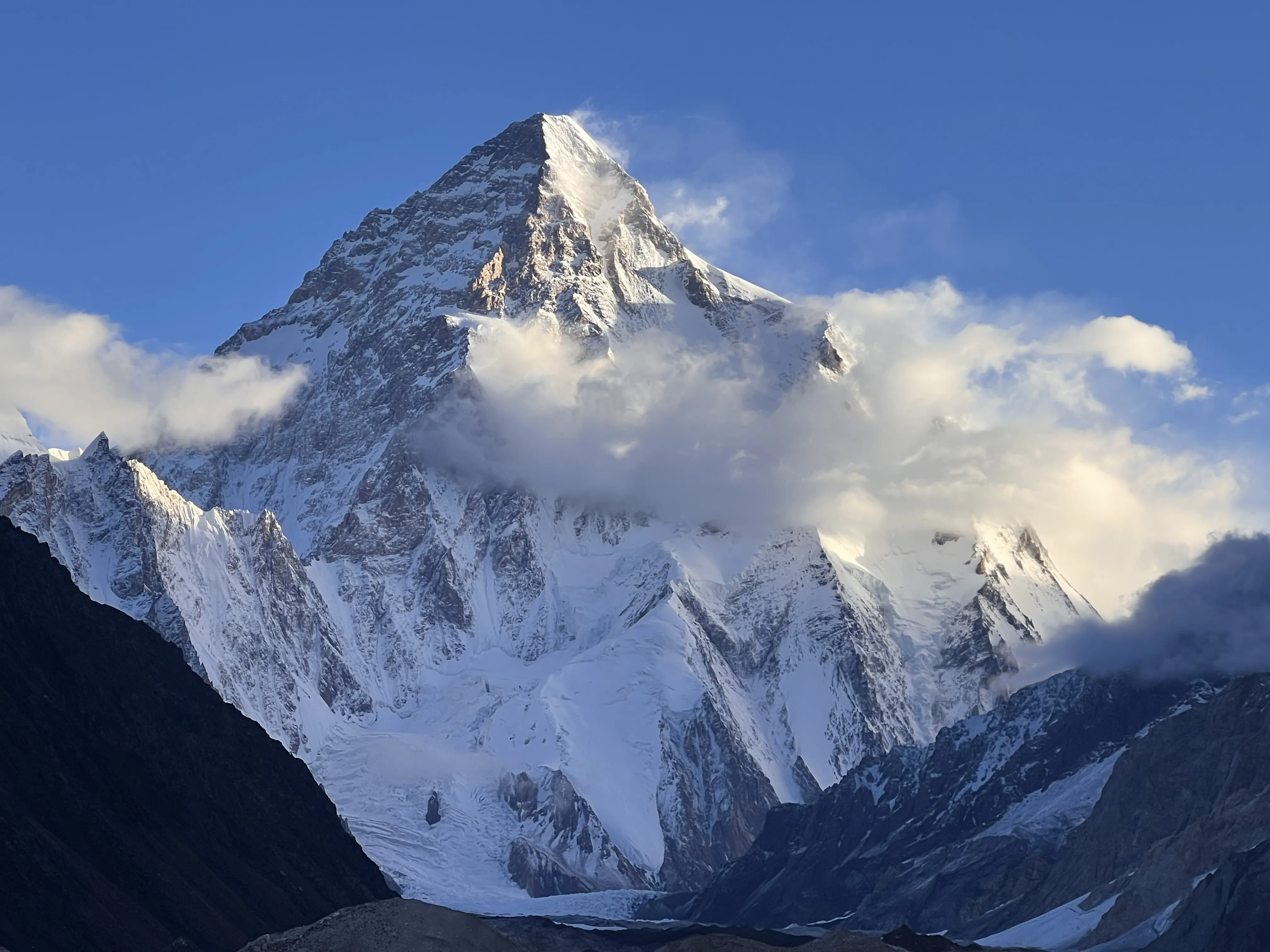
Uli Biaho Tower Expedition – Baltoro Granite Big Wall
A 37-day big wall expedition to Uli Biaho Tower (6,109 m) above the Trango Glacier. Three walking days from Askole to base camp at about 4,000 m, then 21 climbing days on the tower whose 34-pitch east face was the first Grade VII climbed by an American team.
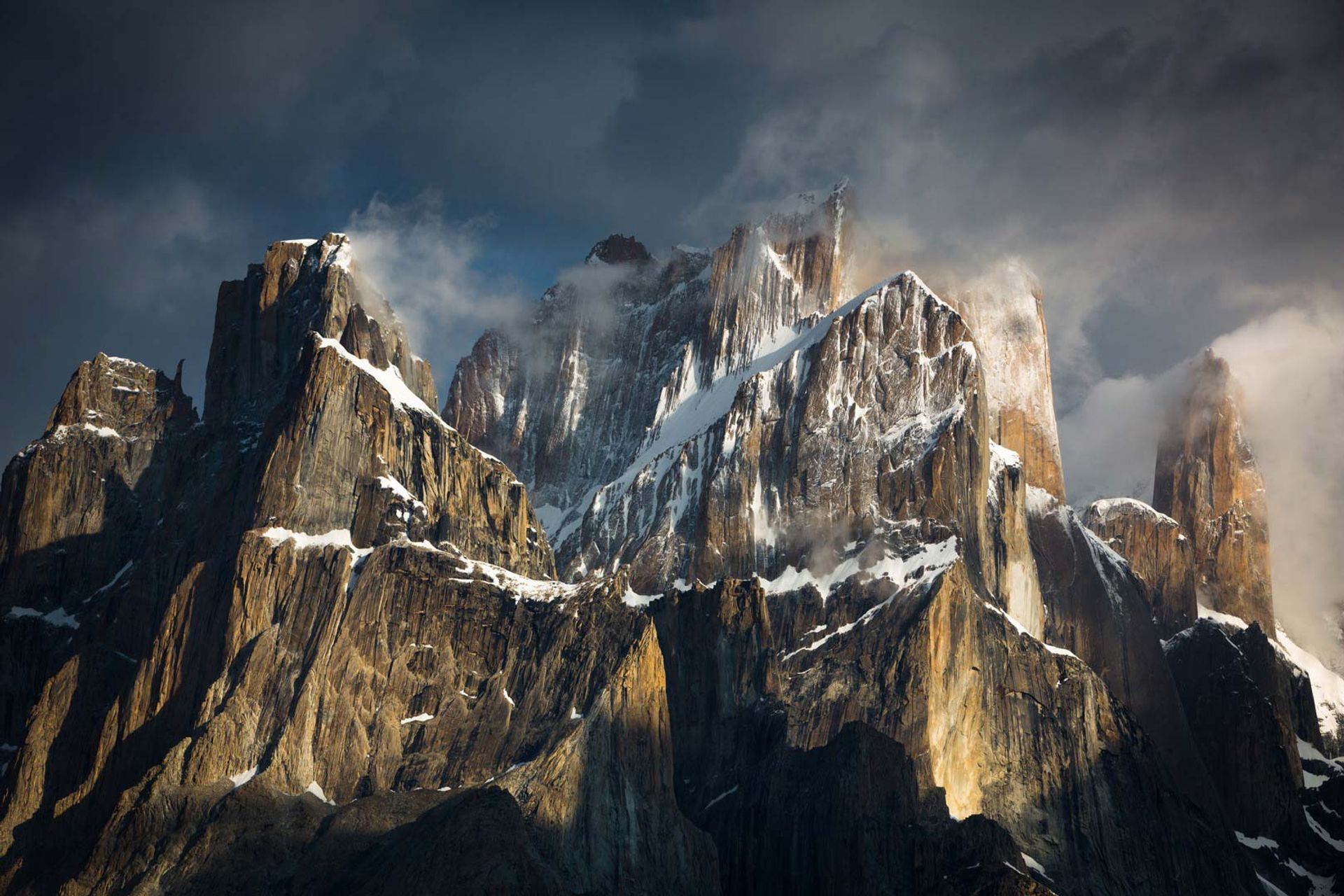
Trango Towers Expedition – Great Trango & Nameless Tower, Karakoram
A 38-day big wall expedition above the Baltoro Glacier. Three walking days from Askole to base camp at about 4,000 m, then 21 climbing days on Great Trango (6,286 m), Nameless Tower (6,239 m) and the other Trango spires.
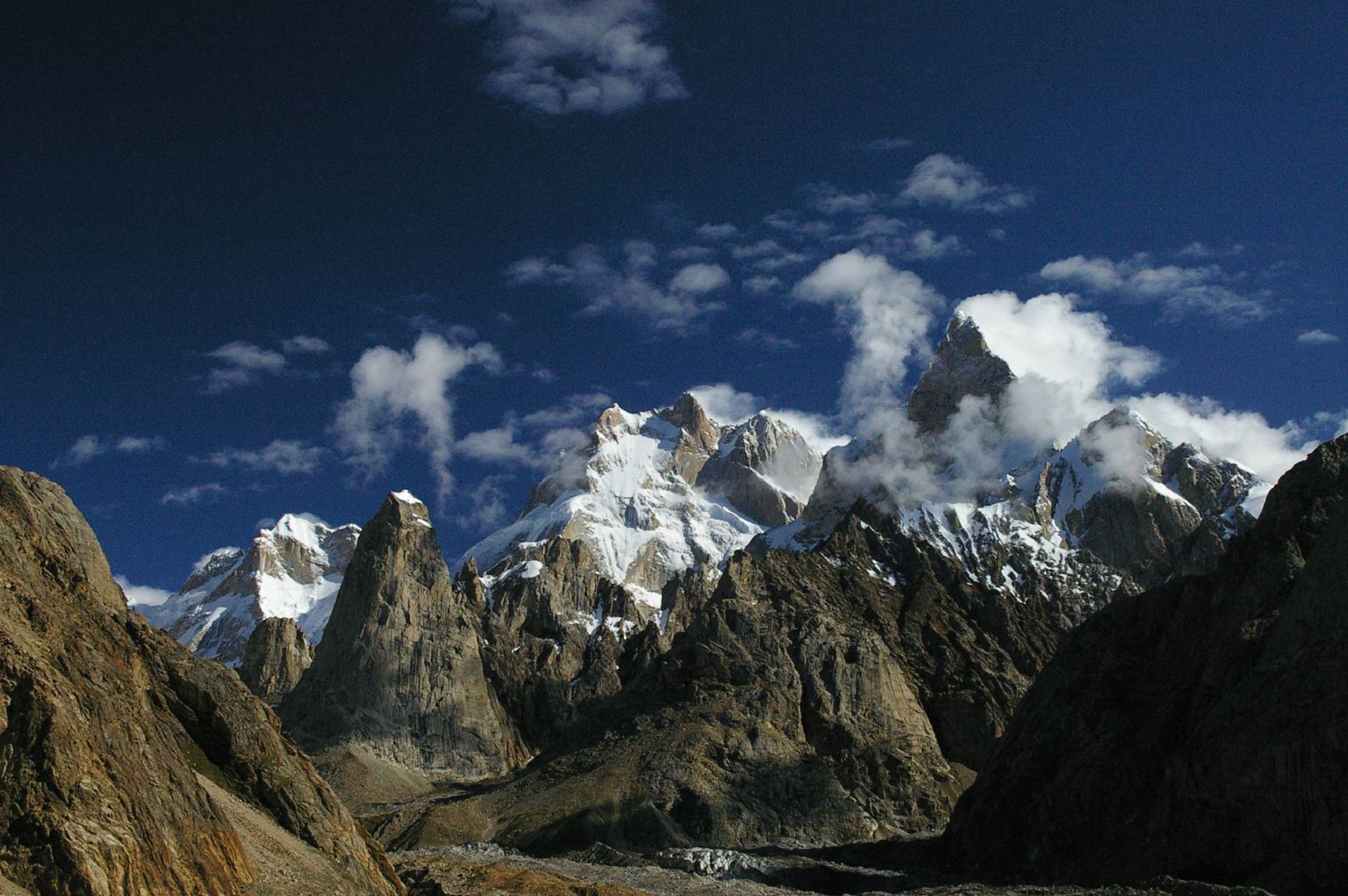
The Ogre (Baintha Brakk) Expedition – Panmah Muztagh, Karakoram
A 41-day expedition to Baintha Brakk I (7,285 m), known as The Ogre, in the Panmah Muztagh. Biafo Glacier approach, base camp at about 4,200 m, then 24 days of technical climbing on a peak with only three recorded ascents.