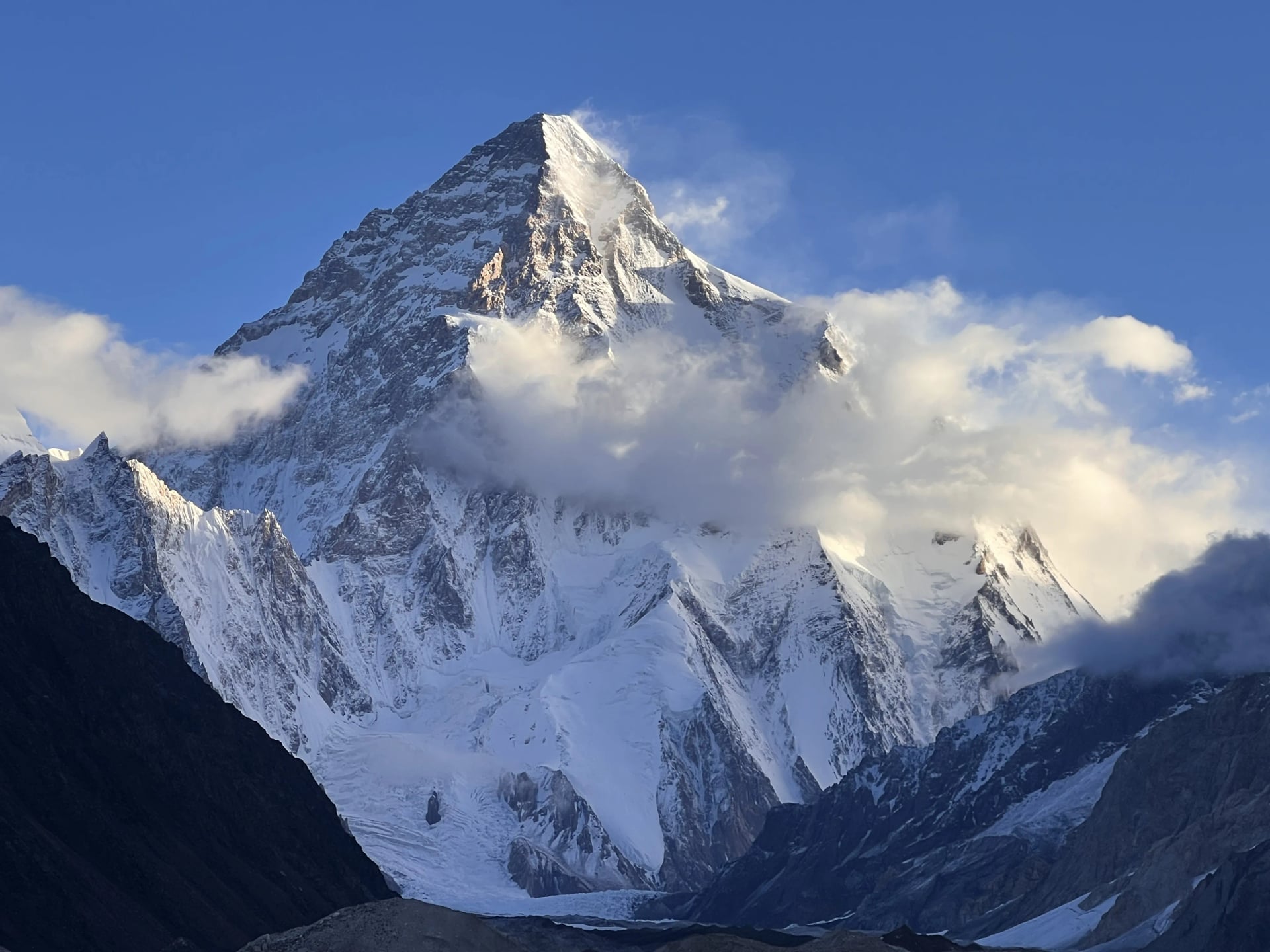
K6 Expedition
A prestigious technical climbing objective in the heart of the Masherbrum Mountains.
K6 Expedition
A prestigious technical climbing objective in the heart of the Masherbrum Mountains.
A prestigious technical climbing objective in the heart of the Masherbrum Mountains.
The window to climb in the Karakoram is brief, and the mountains do not wait. Alpine Karakoram Adventure invites experienced climbers to join our K6 expeditions for the 2026 and 2027 seasons, with fixed departures scheduled from late June through early August—the optimal weather window when the Karakoram offers its most stable conditions . Our 35-day expedition covers every detail from your arrival in Islamabad to your safe return, including all permits, logistics, Base Camp infrastructure, and professional support. K6—also known as Baltistan Peak—rises to 7,282 meters in the Masherbrum Mountains, ranking as the 89th highest peak on Earth . Unlike the crowded 8,000-meter giants, K6 offers serious mountaineers a demanding technical objective with huge, steep faces and great relief above the nearby valleys . Slots are strictly limited each season. Contact us to secure your place on this prestigious Karakoram peak.
Trip Stats
Difficulty
Hard
Max Altitude
7,282 meters
K6 rises to 7,282 meters in the Karakoram Range on the Pakistan-China border, standing as the tallest mountain in the area surrounding the Nangma Valley and Charakusa Glacier . Surveyed as "K6" during the colonial-era Karakoram surveys, it is also known as Baltistan Peak—a name that reflects its dominance over this remote corner of the range . Despite being much lower than its sister mountains—the eight-thousanders and high 7,000-meter peaks like Masherbrum—K6 has huge, steep faces and immense relief above the valleys below . This region has gained popularity among climbers in recent years for its stunning granite spires, accessible base camps, and technical challenges without the extreme altitudes of 8,000-meter peaks . The mountain is a complex massif featuring three main peaks along its summit ridge: K6 Main at 7,282 meters, K6 Central at approximately 7,155 meters, and K6 West at approximately 7,140 meters . It is surrounded by several large glacier systems including the Charakusa, Nangmah, Lachit, and Kondus glaciers. The Charakusa Glacier lies at the head of the Hushe Valley, which in turn leads to the Shyok River and thence to the Indus River . The Charakusa gives access to the north side of K6; to the southwest is the small Nangmah Glacier, and to the east is the larger Kaberi Glacier and valley . The first ascent of K6 was achieved in 1970 by an Austrian party led by Eduard Koblmueller, including Gerhard Haberl, Christian von der Hecken, and Gerd Pressl via the Southeast Ridge from the Nangmah Glacier . The expedition had originally planned to climb Malubiting, but the Pakistan government withdrew this permission after the team arrived in the country; K6 was allotted to them instead . Koblmueller later wrote of their achievement: "After weeks of effort, we finally stood on the summit—a long, narrow ridge of ice. The view stretched across the entire Karakoram, a sea of peaks that seemed to go on forever. We had come for Malubiting, but K6 gave us something far more precious" . K6 presents genuine technical challenges on rocky and icy terrain—this is not a "walk-up" peak. Climbers must be comfortable with mixed climbing, steep ice, technical rock sections, and sustained altitude. The mountain demands strong rope skills, ice climbing ability, and solid judgment in complex terrain. High-altitude porters and Sherpa support are typically not used on K6, making this a true independent climbing objective where teams rely entirely on their own skills . Steve House, who attempted K6 in 2007 with Vince Anderson and Marko Prezelj, described it as "one of the most beautiful and challenging mountains I have ever seen—a place where the climbing is so engaging that the altitude becomes secondary" . We know the porters who carry loads with quiet dignity, the cooks who produce hot meals at 4,300 meters, and the guides who have spent decades in the Hushe Valley. Our 35-day itinerary builds in the flexibility the mountain demands—contingency days for weather windows that open and close, and the simple truth that on K6, self-sufficiency is not optional.
Expedition Highlights
Key landmarks, features, and route experiences
Summit a challenging technical 7,000-meter peak in the Karakoram—the 89th highest mountain on Earth
Climb rocky and icy terrain requiring genuine alpine skills, including steep ice, mixed climbing, and technical rock sections
Experience the relatively short 3-day approach from Hushe Valley, far more accessible than Baltoro region treks
Trek through stunning Hushe Valley landscapes, passing through traditional Balti villages and alpine meadows
Operate as an independent climbing team without high-altitude porter support—pure alpine style
Explore the three distinct summits along the ridge: K6 Main (7,282m), K6 Central (~7,155m), and K6 West (~7,140m)
Camp in the spectacular Charakusa Valley, surrounded by dramatic granite spires and glaciers that attract elite climbers worldwide
Climb in the footsteps of legends—Eduard Koblmueller's 1970 first ascent party and Steve House's 2007 attempt
Enjoy full Base Camp support with experienced kitchen staff preparing quality meals including Pakistani, BBQ, Chinese, English, and traditional mountain food
Benefit from comprehensive logistics including satellite communication, medical kit, and experienced local staff from Karakoram valleys
Most international flights land at Islamabad International Airport. Our team meets you at arrivals, handles the welcome, and transfers you to your accommodation. The rest of the day is yours to recover...
Silver Package
Standard expedition with complete Base Camp support and logistics.
Gold Package
PopularPremium support including enhanced amenities and additional staff.
Platinum Package
Private expedition with dedicated coordination and customized logistics.
What's Included & Excluded
Detailed breakdown of covered expedition logistics versus individual client responsibilities.
Included in Expedition
- Professional airport pickup and drop-off at Islamabad International Airport
- All accommodation (hotels in Islamabad/Skardu, camping during trek)
- All meals from welcome dinner through departure breakfast (including Pakistani, BBQ, Chinese, English, and traditional mountain foods)
- Domestic flights Islamabad-Skardu-Islamabad (subject to weather; road contingency via Chilas if cancelled)
- Full processing of Pakistan expedition permits and government royalty fees
- Central Karakoram National Park (CKNP) waste management fee
- Porter and staff support from Hushe to Base Camp including wages, insurance, food, and equipment (75kg per member up, 50kg down)
- Complete Base Camp infrastructure with individual tents, carpeted mess tent, kitchen tent, storage tent, shower tent, and toilet facilities
- All taxes and service charges
Excluded (Client Account)
- International flights to and from Pakistan
- Pakistan mountaineering visa fee
- Mandatory travel and high-altitude rescue insurance (must cover helicopter evacuation up to 7,300m)
- Personal climbing equipment, technical hardware, and clothing
- Personal expenses: telephone calls, internet, laundry, soft drinks, alcoholic beverages
- Extra nights accommodation due to early arrival, late departure, or early return
- Tips for Base Camp staff, porters, and local crew (customary, amount at your discretion)
- High altitude tents, food, and climbing gear (teams are independent above Base Camp)
Complementary Expeditions
Explore adjacent climbing routes, customized trails, and remote alpine passes.
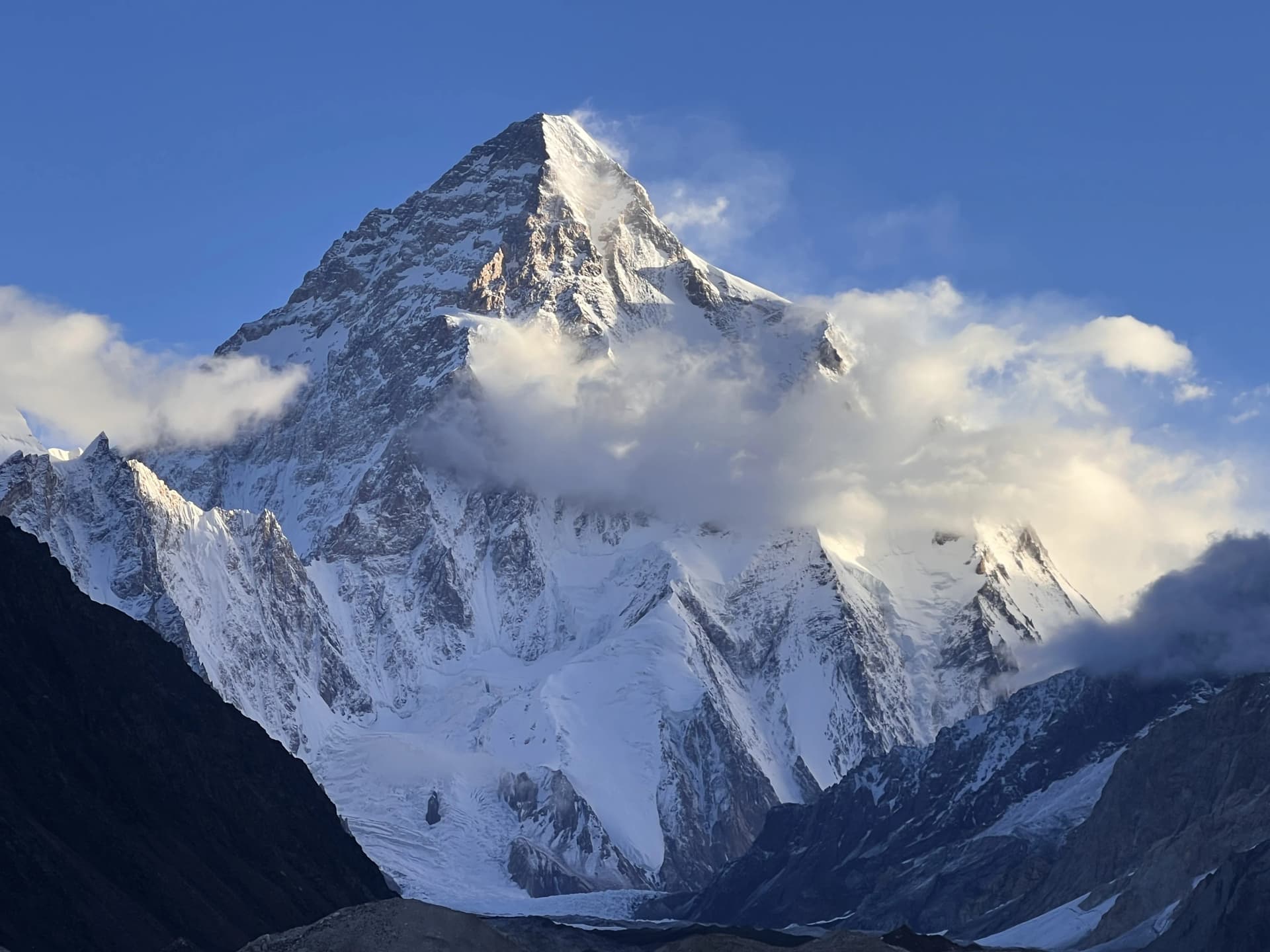
Test expedition
This is the test description
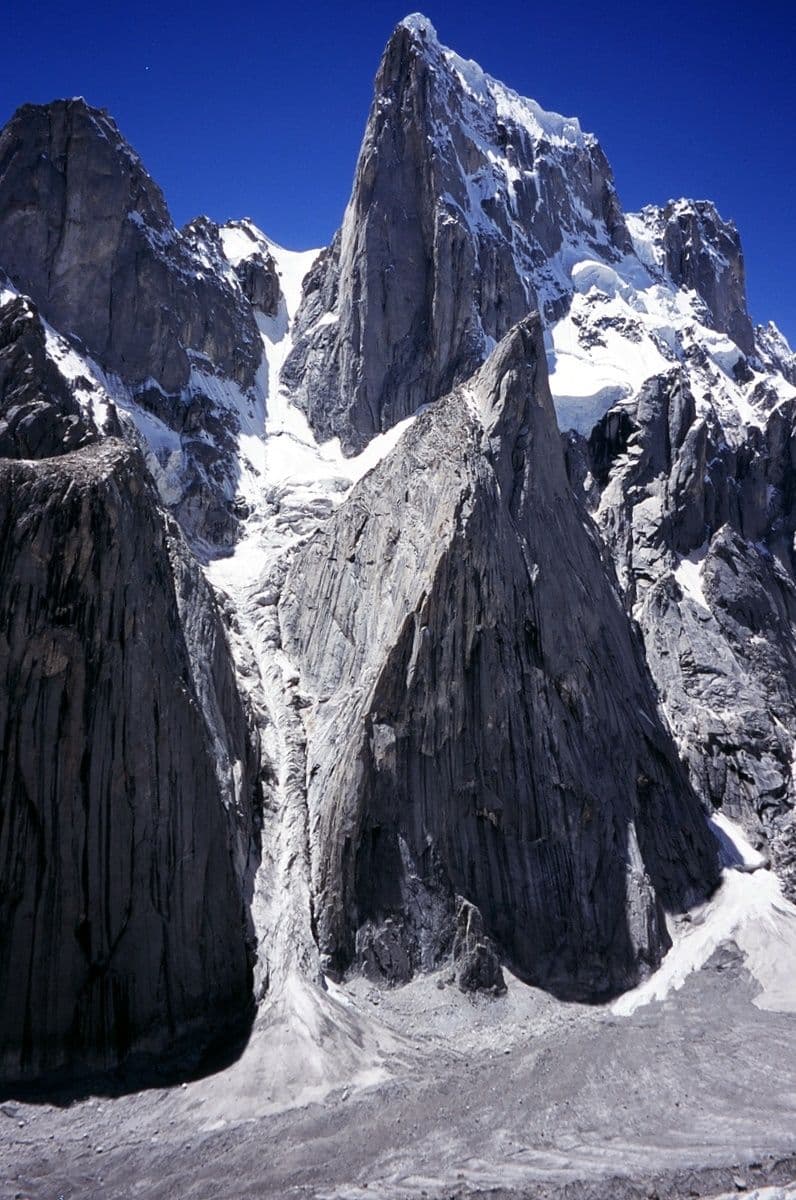
Uli Biaho Expedition
The granite spires of Uli Biaho rise from the Baltoro Glacier like frozen lightning, their sheer walls creating one of the most captivating formations in the entire Karakoram. Situated directly beside the legendary Trango Towers, this twin-summit massif offers elite climbers a choice between two distinct objectives: the higher Uli Biaho Peak (6,417m) with its mixed terrain and unclimbed history until 2006, or the technical Uli Biaho Tower (6,109m) with its vertical granite walls and established big wall routes . Alpine Karakoram Adventure invites experienced climbers to join our Uli Biaho expeditions for the 2026 and 2027 seasons, with fixed departures scheduled from May through August—the optimal weather window when conditions are most stable for technical climbing at altitude . Our 30-day expedition covers every detail from your arrival in Islamabad to your safe return, including all permits, logistics, Base Camp infrastructure, and professional support. Slots are strictly limited for this remote and technical objective. Contact us to secure your place on one of the Karakoram's most magnificent granite formations.
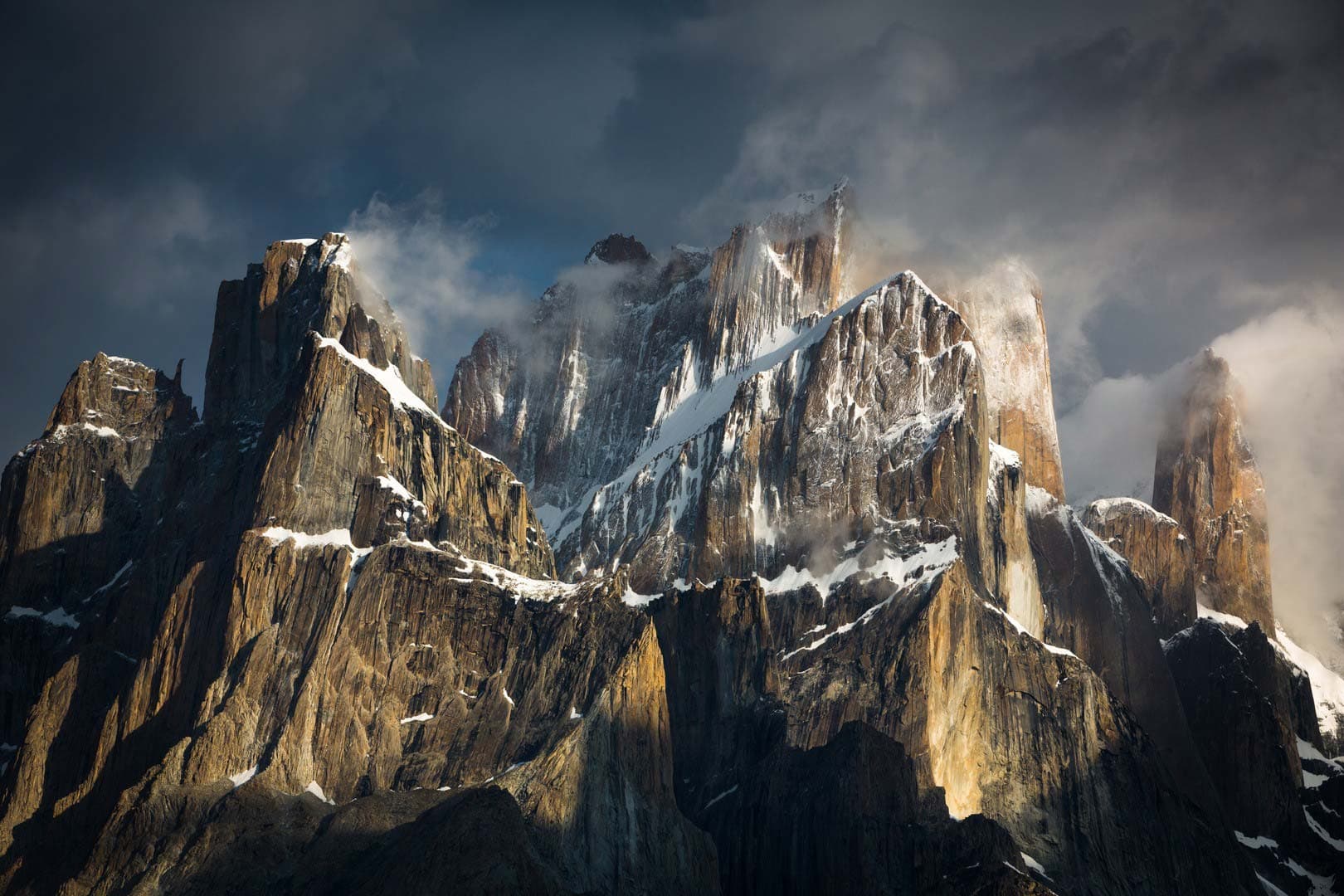
Trango Towers Expedition
The window to climb in the Karakoram is brief, and the mountains do not wait. Alpine Karakoram Adventure invites experienced alpinists to join our Trango Towers expeditions for the 2026 and 2027 seasons, with departures scheduled from July through August—the optimal weather window when the Karakoram offers its most stable conditions . The Trango Towers, rising magnificently north of the Baltoro Glacier, form one of the most spectacular collections of granite spires on Earth, featuring some of the world's largest cliffs and most challenging big wall climbing opportunities . Our 38-day expedition covers every detail from your arrival in Islamabad to your safe return, including all permits, logistics, Base Camp infrastructure, and professional support. Slots are strictly limited each season. Contact us to secure your place on these legendary granite giants.